A Right You Can Hold, But Can't Quite Live
The short answer is yes, but only in certain circumstances.
Adults in South Africa may legally cultivate and use cannabis in private within the framework established by the Constitutional Court and the Cannabis for Private Purposes Act. However, that doesn't mean all cannabis products can be bought or sold freely, nor does it mean every form of cannabis use is legal. That's where many South Africans become confused.
If you've ever searched "Is cannabis legal in South Africa?", "Can I grow cannabis at home?" or "Can I buy cannabis legally?", you're certainly not alone. These have become some of the country's most frequently asked cannabis questions, and the answers are rarely as straightforward as people expect.
The truth is, South Africa isn't living under prohibition anymore, but we're not living with a fully developed legal cannabis market either. We are living somewhere in between. And perhaps that's the most interesting part of the story.
A Right That Still Doesn't Feel Like One
There is a strange feeling that comes with tending five cannabis plants in your own backyard in South Africa today. You are, by law, doing nothing wrong.
Yet many people still glance towards the gate before watering them. They still speak a little more quietly about cannabis than they do about tomatoes or roses. Some still wonder what the neighbours might think if they found out.
That hesitation is worth paying attention to. Not because it means people don't understand the law, but because it tells us something the law alone cannot.
South Africa has recognised an important constitutional right around cannabis, yet many people still don't feel confident enough to exercise that right. It's an unusual position to find ourselves in. The legislation has moved forward, but public understanding hasn't always kept pace.
How Cannabis Became Legal in South Africa
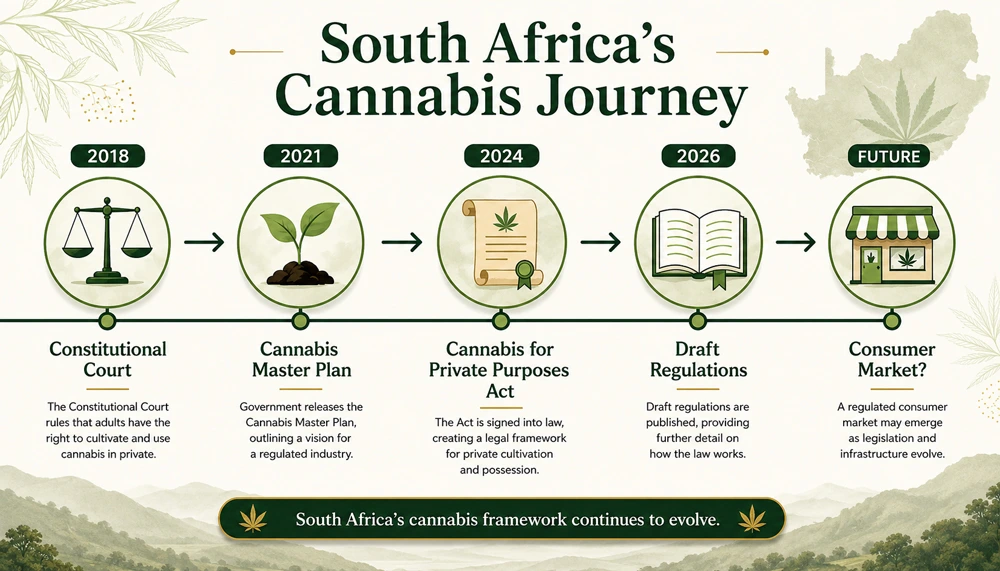
Many people describe 2018 as the year cannabis became legal. That's not quite what happened.
The Constitutional Court wasn't attempting to create a retail cannabis industry. It wasn't deciding whether cannabis was good or bad. Nor was it encouraging recreational use. Instead, it was deciding something much more fundamental. Privacy.
The Court concluded that adults should be free to cultivate and use cannabis in private without unnecessary interference from the state. At the heart of the judgment were two constitutional values: privacy and dignity. That distinction matters.
Countries such as Canada and Uruguay began their cannabis journeys by creating regulated commercial markets. South Africa started somewhere very different.
We began by recognising a constitutional right. The Cannabis for Private Purposes Act, signed into law in 2024, carried that principle forward by providing a legislative framework for private cultivation and possession. Draft regulations published in 2026 added further detail, including proposed possession limits and practical guidance for private use.
Taken together, these changes represented genuine progress. But they didn't answer every question consumers were asking. In many ways, they created a new set of questions instead.
Why So Many South Africans Are Still Confused
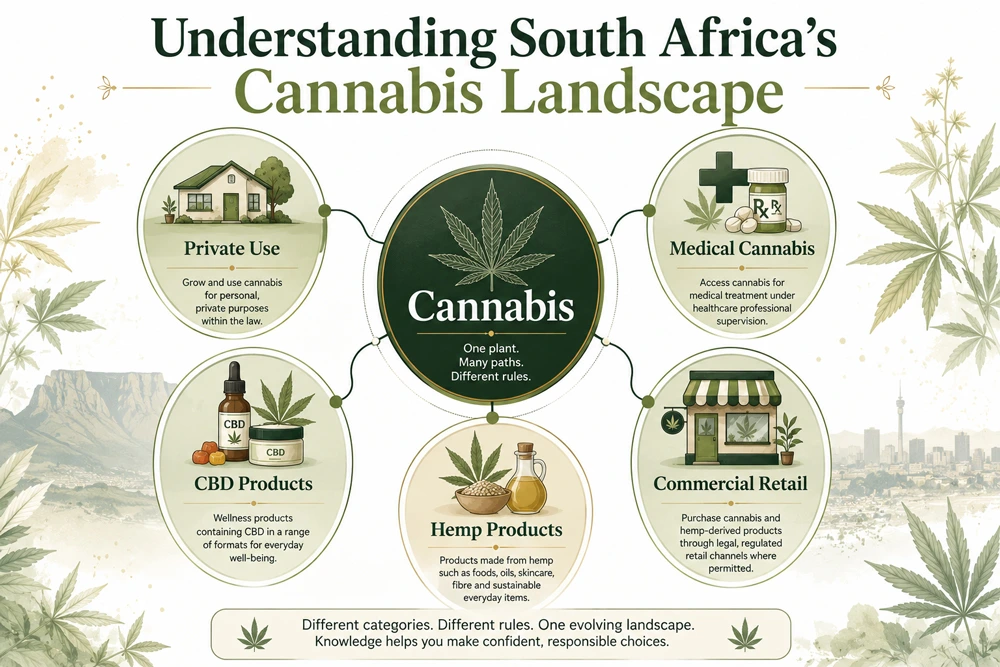
Ask ten people whether cannabis is legal in South Africa and you're likely to hear ten different answers. Some will confidently say yes, and others will insist it's still illegal. Then many will answer with, "I think it's legal... but only if..." The uncertainty isn't surprising.
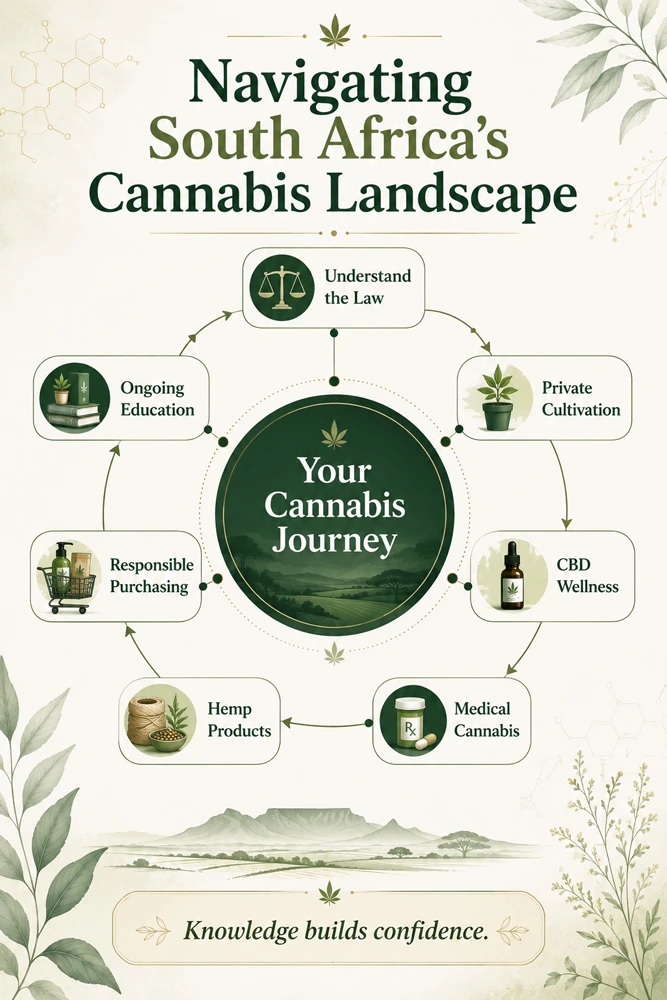
For decades, cannabis existed in one legal category: prohibited. Today, it exists in several:
- Private cultivation follows one legal framework.
- Medical cannabis follows another.
- CBD products are regulated differently again.
- Industrial hemp has its own agricultural pathway.
- Commercial retail continues to evolve as legislation develops.
When these conversations become mixed together, confusion is almost inevitable.
Perhaps the better question isn't, "Is cannabis legal?" Perhaps it's: "Which part of the cannabis industry are we talking about?" Once you ask that question, the picture becomes much clearer.
Rights Need More Than Legislation
One of the easiest mistakes we make is imagining that rights work like light switches. Yesterday something was illegal, and today it's legal. Simple, except life rarely works that way.
Rights need infrastructure. They need public understanding, education, responsible businesses, and trusted information. Most importantly, they need ordinary people to understand how those rights apply to everyday life. Without those things, a constitutional right can still feel strangely uncertain.
And that may be exactly where South Africa finds itself today. The law has opened the door. Now the country is learning what it means to walk through it.
What Cannabis Products Can South Africans Legally Access Today?
One of the biggest misconceptions about South Africa's cannabis reform is that they created an open retail market. They didn't. The Constitutional Court protected the right of adults to cultivate and use cannabis privately. It did not create a commercial marketplace where every cannabis product can be bought and sold freely. That's an important distinction.
Fortunately, that doesn't mean consumers have no legal options. South Africans can already access a growing range of cannabis and hemp-related products through different legal pathways. Understanding those pathways is the first step towards making informed and responsible choices.
Rather than asking, "Is cannabis legal?", it helps to ask a different question: "Which cannabis product am I looking for?"
The answer often depends on the type of product, its intended use and the regulations that apply to it.
Understanding the Different Cannabis Categories
One of the biggest reasons people feel overwhelmed by South Africa's cannabis laws is that the word cannabis is often used as though it describes a single product.
In reality, cannabis is an entire family of products, each designed for different purposes and governed by different regulations.
Understanding these categories is one of the easiest ways to make informed purchasing decisions.
CBD Wellness Products
CBD (cannabidiol) is one of the most recognised naturally occurring cannabinoids found in the cannabis plant. Unlike THC, CBD is generally regarded as non-intoxicating and has become increasingly popular among people looking to incorporate cannabinoid wellness products into their daily routines.
CBD products are available in several convenient formats, each offering a different experience depending on your preferences and lifestyle.
| Product | Best suited for | Typical use |
|---|---|---|
| CBD Oils | People looking for flexible dosing | Daily wellness routines |
| CBD Gummies | Beginners and those who prefer a convenient format | Easy everyday use |
| CBD Capsules | People who prefer measured doses | Consistent daily supplementation |
| CBD Topicals | Localised application | Creams, balms and massage products |
Many consumers begin with CBD oils because they offer flexibility, while gummies and capsules are often chosen for convenience. Topical products are typically selected by people looking to apply a product directly to a specific area as part of their wellness routine.
Explore related categories:
- Browse CBD Oils
- Shop CBD Gummies
- View CBD Capsules
- Explore CBD Topicals
Hemp Wellness Products
Although hemp belongs to the cannabis family, its primary purpose is very different.
Rather than focusing on cannabinoids, hemp is valued for its nutrition, sustainability and versatility.
Today, hemp can be found in products such as:
- Hemp seed oil
- Hemp protein
- Hemp foods
- Hemp skincare
- Personal care products
- Sustainable textiles
Consumers often choose hemp products as part of a healthy lifestyle, nutritional plan or environmentally conscious way of living.
Explore our Hemp Wellness collection.
Medical Cannabis
Medical cannabis follows an entirely different pathway from either CBD wellness products or private cultivation.
It is intended for patients who have been assessed by an appropriately qualified healthcare professional and should always be used under professional guidance where applicable.
If you're exploring medical cannabis, the first step isn't choosing a product, it's speaking with your healthcare practitioner.
Private Cultivation
Growing cannabis at home remains an option for adults within South Africa's legal framework for private use.
Many people appreciate the independence of cultivating their own plants, while others prefer the convenience and consistency of professionally manufactured wellness products.
The choice depends on your personal circumstances, experience and what the law currently allows.
CBD vs THC vs Hemp: Understanding the Difference
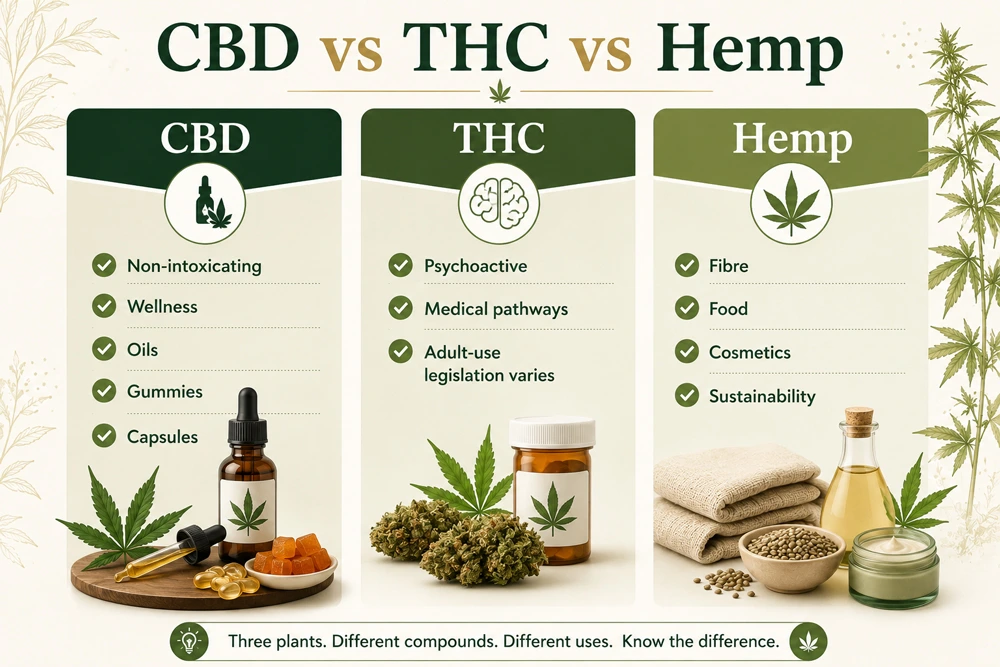
One of the most common questions consumers ask is: "What's the difference between CBD, THC and hemp?" Although they are closely related, they are not the same thing. Understanding these differences makes choosing products far less confusing.
Private Use vs Medical Cannabis vs CBD Products
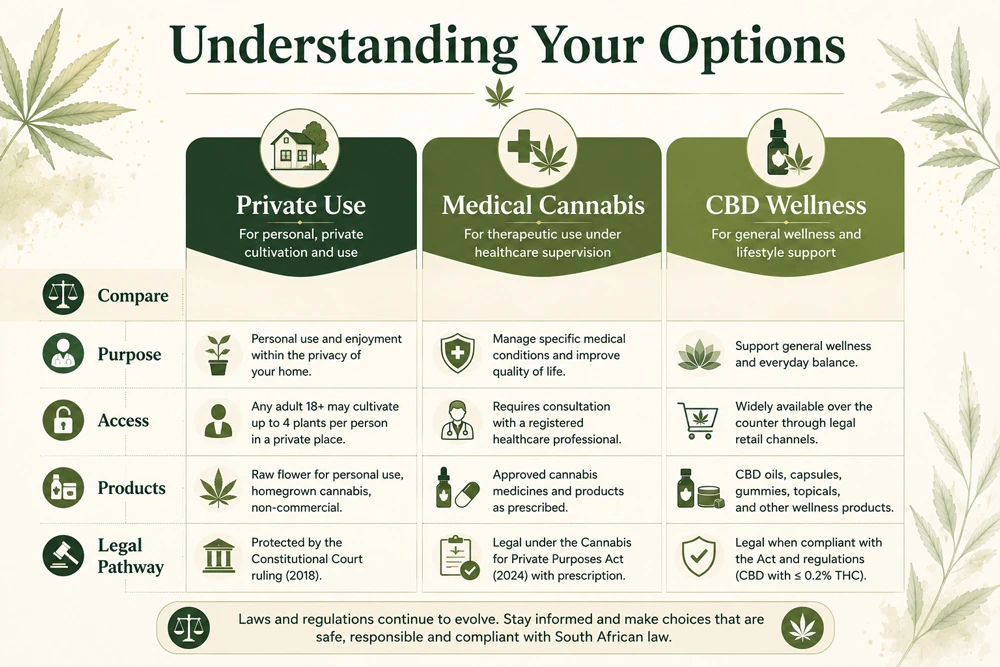
Another area that causes confusion is the difference between legal pathways. Although these categories all relate to cannabis, they serve very different purposes.
What Can You Grow vs What Can You Buy?
One of the easiest ways to understand South Africa's cannabis laws is to separate private rights from consumer products. This simple distinction answers one of the most searched questions in South Africa:
- You may legally cultivate cannabis for private use within the law, but the commercial marketplace is governed by different regulations depending on the product category.
Choosing the Right Product for Your Needs
If you're new to cannabis wellness products, it's perfectly normal to feel unsure about where to begin.
Rather than asking, "What's the strongest product?", consider asking:
- Am I looking for an everyday wellness routine?
- Would I prefer a product that's easy to take while travelling?
- Do I want a measured daily serving?
- Am I looking for a product designed for topical application?
- Am I more interested in nutritional hemp products than cannabinoids?
The answers will often guide you towards the most suitable product category.
Cannamart's educational resources are designed to help you compare product types, understand ingredients and make informed purchasing decisions without unnecessary complexity.
Whether you're interested in CBD Oils, CBD Gummies, CBD Capsules, CBD Topicals or Hemp Wellness Products, learning how each category differs is the first step towards choosing confidently.
Why Education Matters More Than Ever
South Africa's cannabis industry is still evolving and new regulations continue to emerge. Scientific research continues to expand, and consumer awareness continues to grow. In many ways, we're witnessing the development of an entirely new industry in real time. That creates tremendous opportunities, but it also makes education more valuable than ever.
Understanding the difference between CBD and THC, knowing when a product belongs in the wellness category rather than the medical category, recognising the role of hemp in everyday products and learning how current legislation applies to consumers all contribute to safer, more informed choices.
The future of South Africa's cannabis industry won't be shaped only by legislation. It will be shaped by informed consumers who know how to navigate it responsibly.
Frequently Asked Questions About Cannabis in South Africa
As South Africa's cannabis laws continue to evolve, many consumers are still unsure about what is, and isn't, allowed. Here are answers to some of the most common questions people ask.
Is cannabis legal in South Africa?
Yes, but only within specific legal limits.
Adults may cultivate, possess and use cannabis in private for personal use, subject to the framework established by the Constitutional Court and the Cannabis for Private Purposes Act. However, this does not mean all cannabis products can be bought, sold or consumed without restriction.
Understanding the difference between private use, medical cannabis, CBD wellness products and commercial retail is essential to understanding South Africa's cannabis laws.
Can I grow cannabis at home?
In many cases, yes.
South African law allows adults to cultivate cannabis for personal use in private, provided they remain within the limits set out in current legislation and regulations.
Before deciding to grow cannabis, it's important to familiarise yourself with the latest legal requirements, including possession limits and cultivation guidelines.
Can I legally buy cannabis in South Africa?
This is where many people become confused.
South Africa does not yet have a fully developed adult-use retail cannabis market similar to those found in countries such as Canada.
However, consumers can legally access various cannabis and hemp-related products through existing regulatory pathways, including compliant CBD wellness products, hemp-derived consumer goods and, where clinically appropriate, medical cannabis under professional supervision.
Because legislation continues to evolve, purchasing products from reputable retailers that prioritise compliance and consumer education is more important than ever.
Is CBD legal in South Africa?
CBD products may be legally available under certain regulatory conditions.
CBD has become one of the fastest-growing wellness categories in South Africa because it is generally regarded as non-intoxicating and is available in a variety of product formats, depending on current regulations.
Consumers should always read product information carefully and purchase from retailers that provide clear labelling, transparent ingredient information and responsible educational guidance.
Is hemp the same as cannabis?
Hemp belongs to the cannabis family but is cultivated for different purposes.
Rather than being grown primarily for intoxicating effects, hemp is valued for its fibre, seeds, nutritional applications, skincare ingredients and sustainability benefits.
Today, hemp can be found in foods, clothing, cosmetics, personal care products and environmentally friendly building materials.
Although hemp and cannabis come from the same botanical family, they occupy different places within both the marketplace and the legal framework.
What's the difference between CBD and THC?
CBD and THC are both naturally occurring cannabinoids found in the cannabis plant, but they interact with the body in different ways.
CBD is generally associated with wellness applications and does not typically produce the intoxicating effects commonly linked to cannabis.
THC is the cannabinoid responsible for the psychoactive effects that many people associate with cannabis.
Understanding this distinction helps consumers choose products that align with their individual preferences, wellness goals and the current legal framework.
How can I choose cannabis products responsibly?
An informed consumer is usually a confident consumer. Before purchasing any cannabis or hemp-derived product, consider the following:
- Read the ingredient list carefully.
- Understand the cannabinoid content.
- Follow dosage guidance where provided.
- Choose products with professional packaging and clear labelling.
- Buy from retailers committed to education and transparency.
- Avoid products making unrealistic health claims.
Responsible purchasing begins with asking good questions. The best retailers welcome those questions.
The Future of Cannabis in South Africa
South Africa's cannabis story is still being written. Legislation continues to evolve, while scientific research continues to expand and new businesses continue to emerge. Public understanding continues to grow.
The conversation has moved well beyond whether cannabis should be discussed at all. Today, the more important conversation is about how South Africa builds a responsible, transparent and sustainable cannabis industry that benefits consumers, entrepreneurs, researchers and communities alike.
That future won't be shaped by legislation alone. It will also be shaped by education.
Consumers who understand the differences between CBD, hemp, medical cannabis and private cultivation will make better decisions. Businesses that prioritise transparency and quality will earn greater trust. And an industry built on accurate information is far more likely to mature responsibly than one built on confusion or misinformation.
The journey is far from over, but every informed decision helps move it forward.
Knowledge Builds Confidence
There is a reason that first image of five cannabis plants behind a garden gate resonates with so many South Africans. It isn't really about the plants. It's about certainty.
For decades, cannabis was spoken about in whispers. Today, the conversation is becoming more open, but uncertainty still lingers. Laws have changed, research has expanded and new product categories have emerged, yet many consumers still feel unsure about what they can access, what different products mean and how to navigate an evolving marketplace responsibly.
Perhaps that's the real opportunity before us. Not simply to build a cannabis industry, but to build a community of informed consumers who understand the law, appreciate the science and feel confident making responsible choices. A constitutional right is an important beginning. Education is what allows people to exercise that right with confidence.
At Cannamart, we believe informed choices begin with trusted information. Whether you're exploring CBD oils, gummies, capsules, topicals, hemp wellness products or simply looking to better understand South Africa's changing cannabis landscape, our goal is to provide educational resources alongside carefully selected product categories that support responsible consumer decision-making.
Because the best cannabis journey doesn't begin with a purchase. It begins with understanding.
Continue Your Cannabis Education
Curious about where to begin? Explore Cannamart's Cannabis Education Hub to learn more about CBD, hemp, wellness products, cannabis legislation and responsible product selection. When you're ready, browse our range of carefully curated wellness products and discover options designed to help you make informed, confident choices.
Disclaimer: This blog supports responsible cannabis use. The information contained in this article is for educational and informational purposes only and is not intended as health or medical advice. Always consult a physician or other qualified health provider regarding any questions you may have about a medical condition or health objectives.
Our latest content
Check out what's new in our company !