If you live with arthritis, you probably know the feeling before you even think about the diagnosis. Morning stiffness that makes the kettle feel heavier than it should. Fingers that refuse to cooperate. Knees that seem to predict tomorrow's weather better than any forecast.
While arthritis comes in many forms, one thing connects most of them: inflammation.
Understanding what's happening inside your joints, and where cannabis may fit into the picture, can help you make more informed decisions alongside your healthcare provider.
What Causes Arthritis Pain?
Arthritis isn't a single disease. It's an umbrella term covering more than 100 different joint conditions.
The most common include:
- Osteoarthritis – caused by gradual cartilage wear over time.
- Rheumatoid arthritis – an autoimmune condition where the immune system attacks healthy joint tissue.
- Psoriatic arthritis – joint inflammation associated with psoriasis.
Although the causes differ, inflammation plays a central role in all three.
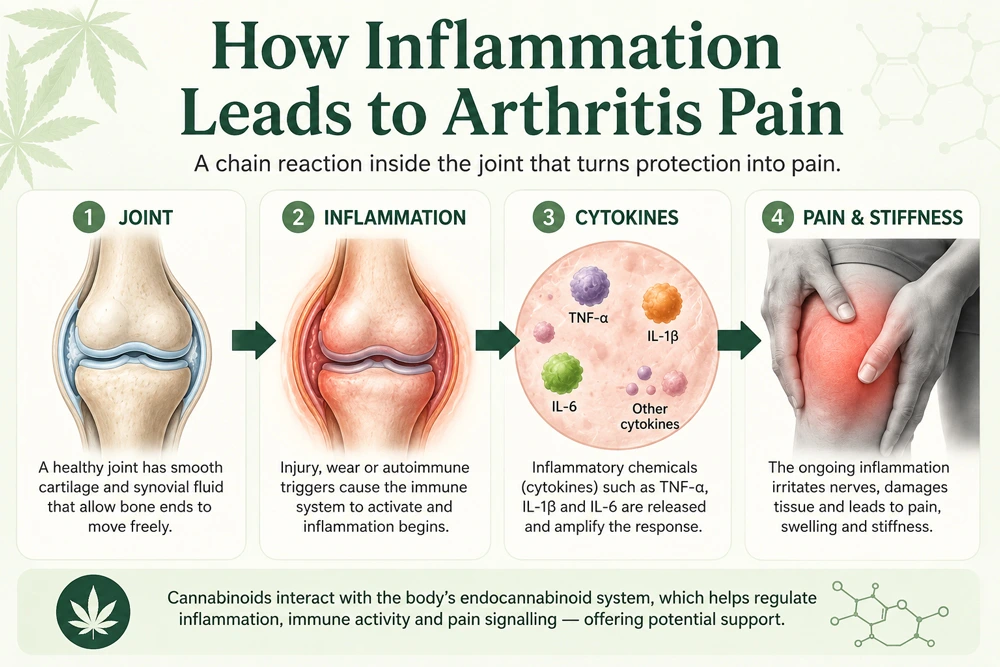
Normally, inflammation helps your body heal after injury or infection. Once the job is done, it settles down. In arthritis, however, the immune system can remain switched on, releasing inflammatory messengers such as TNF-alpha, IL-1β and IL-6, which contribute to swelling, stiffness and pain. In inflammatory arthritis, this ongoing response may also damage cartilage and bone over time.¹
Because of this, prescribed disease-modifying medicines (DMARDs) remain the cornerstone of treatment for inflammatory arthritis and should never be stopped without medical advice.
Where Does Cannabis Fit In?
Your body contains its own regulatory network called the endocannabinoid system (ECS). The ECS helps regulate many everyday functions, including:
Researchers have identified cannabinoid receptors within joint tissue affected by both osteoarthritis and rheumatoid arthritis, suggesting the ECS may play a role in joint health.²
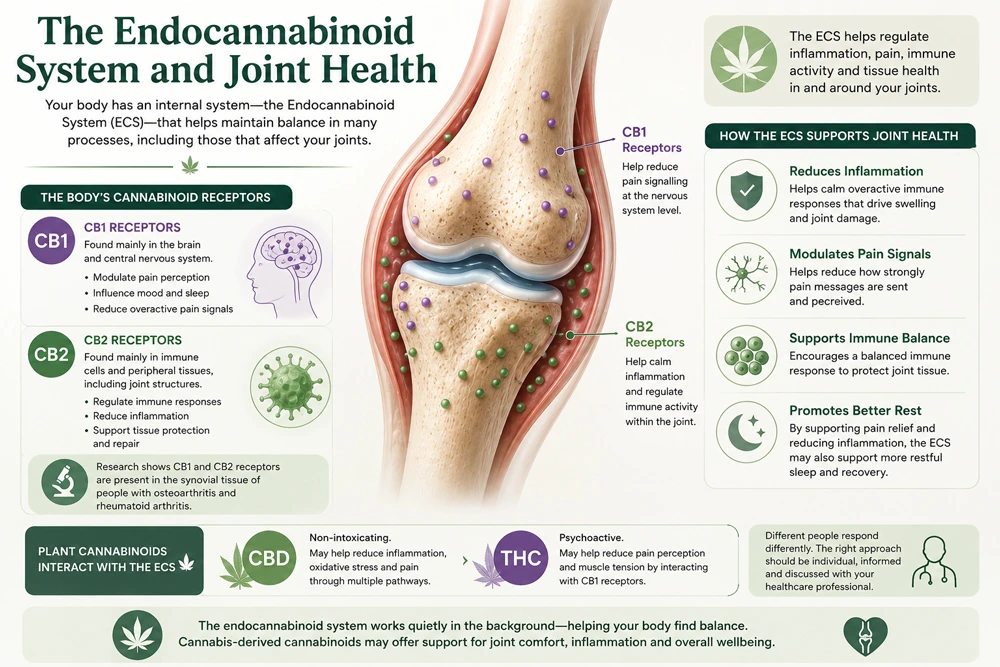
Plant cannabinoids interact with this system in different ways.
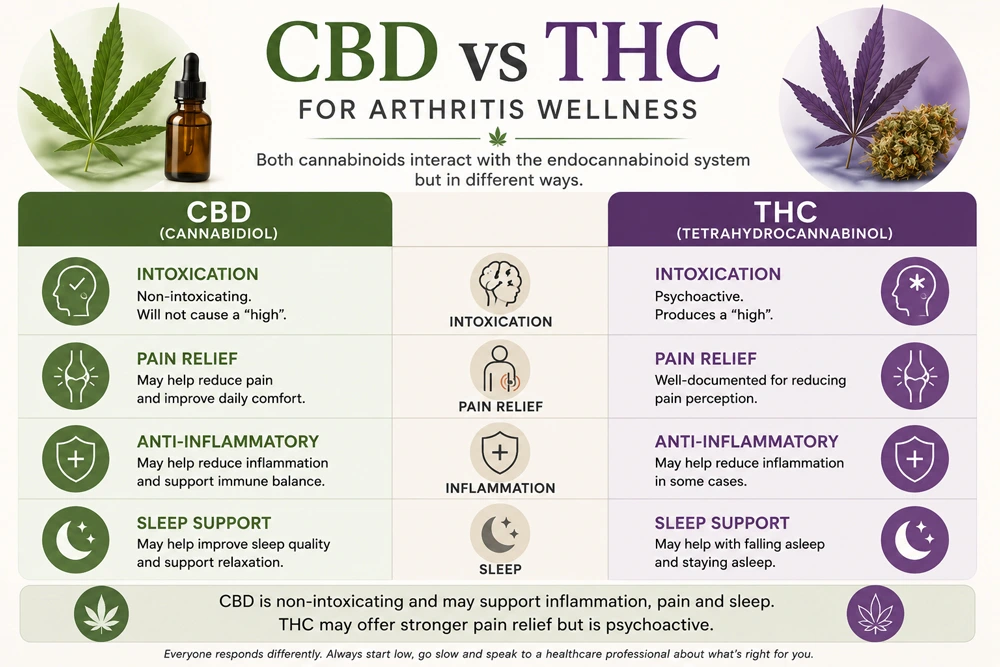
- THC may help reduce pain perception but is intoxicating.
- CBD is non-intoxicating and has attracted significant research interest because of its complex effects on inflammation, oxidative stress and pain pathways.
Rather than acting like a conventional painkiller, cannabinoids appear to influence several biological processes involved in chronic inflammation.
What Does the Research Say?
The laboratory evidence is encouraging. Studies in cells and animals suggest CBD may reduce the production of inflammatory molecules such as TNF-alpha and several interleukins while supporting immune regulation.¹
Human research is more limited, but the findings are promising. One exploratory study found that people using CBD for arthritis reported improvements in pain, physical function and sleep quality.³
Data from the UK Medical Cannabis Registry also found that patients receiving prescribed cannabis-based medicinal products reported improvements in pain, anxiety and sleep over time.⁴
However, researchers consistently point out that larger, high-quality clinical trials are still needed before firm conclusions can be drawn.
In other words, cannabis shows potential, but it isn't yet considered a standard treatment for arthritis.
A Balanced Approach
Organisations such as the Arthritis Foundation recognise the growing interest in CBD while emphasising that evidence is still developing. Their guidance recommends using CBD only as a possible complement to existing treatment, not as a replacement for prescribed medication, and choosing products that have been independently tested for quality.⁵
If you're considering cannabis as part of your wellness routine, it's worth discussing it with your healthcare professional, particularly if you take other medications.
Which Products Are Most Commonly Used?
Depending on your individual wellness goals, people living with arthritis often explore:
- CBD oils for flexible daily use
- CBD capsules for consistent dosing
- Topical creams and balms for localised application
- Balanced THC:CBD products under appropriate medical guidance

Everyone responds differently, which is why starting low, choosing quality products and monitoring your response is important.
The Bottom Line
Cannabis isn't a cure for arthritis.
What current research suggests is that cannabinoids may support some of the biological processes involved in inflammation, pain and sleep. For some people, this may become a useful addition to an overall management plan developed with their healthcare team.

As research continues to grow, one thing remains clear: When it comes to arthritis, your joints deserve both hope and evidence.
Looking for Quality CBD Wellness Products?
If you're exploring CBD as part of your wellness journey, browse Cannamart's range of CBD oils, capsules and topical products from trusted brands that prioritise quality and transparency.
Shop online today and discover wellness products designed to support your everyday routine.
Frequently Asked Questions
Can CBD cure arthritis?
No. There is currently no evidence that CBD cures arthritis or reverses joint damage. Research is investigating whether it may help support pain, inflammation and sleep in some individuals.
Is CBD better than THC for arthritis?
CBD and THC work differently. CBD is non-intoxicating, while THC may provide additional pain relief but also causes psychoactive effects. The most suitable option depends on the individual and should be discussed with a healthcare professional.
Can I stop my arthritis medication if I use CBD?
No. CBD should not replace prescribed arthritis medicines such as DMARDs unless advised by your treating specialist.
Is there scientific evidence for cannabis and arthritis?
Yes, but the evidence is still evolving. Laboratory studies are encouraging, while human clinical studies remain relatively limited and larger trials are still needed.
References
- Gouin O, et al. Cannabis and Rheumatoid Arthritis: A Scoping Review Evaluating the Benefits, Risks, and Future Research Directions. 2023.
- Richardson D, et al. Characterisation of the cannabinoid receptor system in synovial tissue and fluid in patients with osteoarthritis and rheumatoid arthritis. Arthritis Research & Therapy.
- Frane N, et al. Cannabidiol as a treatment for arthritis and joint pain. Journal of Cannabis Research. 2022.
- UK Medical Cannabis Registry. Assessment of clinical outcomes in patients with inflammatory arthritis. 2025.
- Arthritis Foundation. CBD Guidance for Adults With Arthritis.
Disclaimer: This blog supports responsible cannabis use. The information contained in this article is for educational and informational purposes only and is not intended as health or medical advice. Always consult a physician or other qualified health provider regarding any questions you may have about a medical condition or health objectives.
Our latest content
Check out what's new in our company !