Spring has arrived, and with it South Africa's Heart Awareness Month. So, forget the expensive gadgets and miracle promises for a moment. Here's what the science actually says about ageing well, and the surprisingly ordinary habits that seem to matter most.
There's something about spring in South Africa.
The mornings feel different, and the light hangs around a little longer. Gardens start waking up, the jacarandas are getting ready to do their thing, and after winter, there's that familiar urge to open the windows, clear things out, and start again.
September also happens to be Heart Awareness Month, culminating in World Heart Day on 29 September, which makes it a rather good time to talk about longevity. But not the glossy, biohacking, you-need-another-supplement version of longevity.
Scroll through a wellness feed and you'd be forgiven for thinking that living a long, healthy life requires cold plunges, red-light panels, complicated supplement stacks, wearable gadgets and a bank balance capable of funding all of the above.
The science tells a much less glamorous story, and that's actually good news. The things most consistently associated with living longer and, importantly, living healthier for longer, are remarkably ordinary.
- Move your body.
- Eat well.
- Sleep.
- Look after your heart.
- Stay connected.
- Manage stress.
Not quite as exciting as a cryotherapy chamber, perhaps. But considerably easier to fit into a Tuesday, and in South Africa, this conversation matters.
Cardiovascular disease remains a major health concern, and the Heart and Stroke Foundation South Africa estimates that hundreds of South Africans die from heart disease and strokes every day. More encouragingly, many cardiovascular risk factors are linked to things we can influence, including physical activity, food choices, smoking, stress management and knowing important health numbers such as blood pressure.
So this spring, instead of chasing the next hack, let's go back to the things that have been quietly doing the heavy lifting all along. Here are six longevity habits that actually matter.
1. Move naturally and safely build your strength
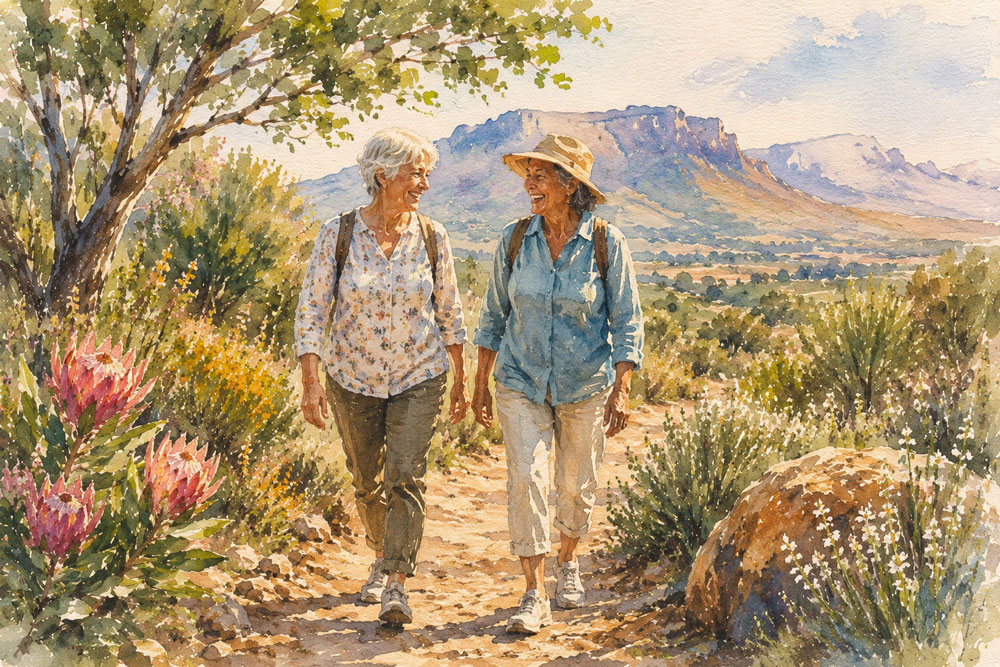
If scientists could put movement into a pill, we'd probably all be fighting over it. One of the best-known studies on lifestyle and longevity followed more than 120,000 people and identified regular physical activity as one of five healthy lifestyle factors associated with significantly longer life expectancy. But here's where it gets interesting. Movement doesn't have to mean Lycra, burpees and an instructor shouting at you before sunrise. Look at many of the world's long-lived populations and you'll find something much simpler going on: people move because movement is part of life.
- They walk.
- They garden.
- They cook.
- They tend to their homes.
- They visit people.
- They carry things.
- They get up and down.
Movement isn't necessarily something squeezed into an hour between the rest of their lives. It's woven through the day. That's a useful reminder for the rest of us. That a brisk walk, gardening, taking the stairs all counts. Also walking to the corner shop, and most importantly dancing around the kitchen while making dinner absolutely counts.
The goal isn't to become an athlete. It's to spend less of your life completely still. There is, however, another type of movement that becomes increasingly important as we get older: strength training.
From around our 30s, we gradually begin losing muscle mass. The process accelerates as we age and can eventually contribute to weakness, falls, reduced mobility and loss of independence. Fortunately, muscle is wonderfully responsive. The World Health Organization recommends that adults include muscle-strengthening activities on at least two days each week, alongside regular aerobic activity.
And no, that doesn't mean you need to start deadlifting your body weight. Bodyweight squats. Resistance bands. Light dumbbells. Carrying shopping bags. Simple strength exercises at home. Start where you are. Your 70-year-old self isn't asking you to become a bodybuilder. They're asking you to keep getting out of the chair.
2. Eat mostly plants
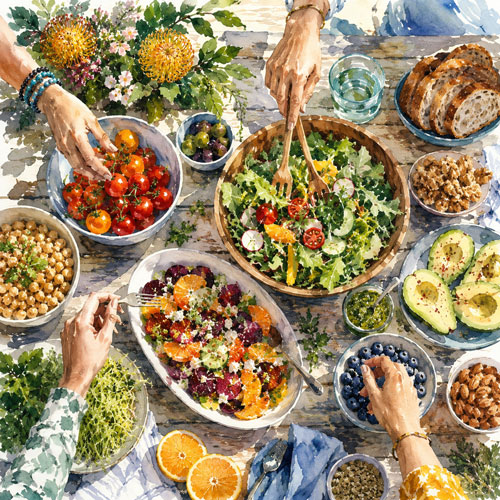
Nutrition has a remarkable ability to become complicated. One month we're frightened of carbohydrates. The next we're putting butter in coffee. Then there's a new powder, seed, berry or eating window we're apparently supposed to know about. Meanwhile, the boring vegetables are sitting quietly in the fridge.
Across many of the world's long-lived populations, one dietary pattern appears again and again: people eat a lot of plants. Vegetables, fruit, beans, lentils, whole grains, nuts and seeds make up a substantial part of the plate.
This pattern is also reflected in decades of research into Mediterranean-style and DASH eating patterns, which are associated with better cardiovascular outcomes. That doesn't mean everyone has to become vegetarian. It means plants deserve more room on the plate. And perhaps the easiest way to do that isn't by banning half the kitchen.
Think addition rather than restriction.
- Add another vegetable to dinner.
- Throw beans or lentils into meals a few times a week.
- Choose whole grains more often.
- Keep fruit somewhere you can actually see it.
- Grab a handful of nuts instead of automatically reaching for the biscuit tin.
- Use herbs and spices generously and make vegetables taste like food you actually want to eat.
Spring makes this easier. Fresh produce becomes brighter, meals become lighter and suddenly a big crunchy salad doesn't feel quite as depressing as it did in July. Let the season help. And while we're clearing up old health advice, a quick word about the famous glass of red wine for your heart. Don't start drinking for health reasons. Although older longevity research sometimes included moderate alcohol consumption among lifestyle factors, current health guidance is far more cautious. When it comes to alcohol, less is better. Your heart does not require a Pinotage prescription.
3. Protect your sleep like it matters

For years, sleep was treated as the thing ambitious people sacrificed to get more done. We know better now. In 2022, the American Heart Association added sleep to its cardiovascular health checklist, creating what it calls Life's Essential 8. That's how fundamental sleep has become to the heart-health conversation. For most adults, the general recommendation is around seven to nine hours a night.
While you sleep, your body is doing far more than simply switching off. Sleep plays a role in cardiovascular function, metabolism, memory, immune health and emotional regulation. And both consistently too little and too much sleep have been associated with poorer health outcomes. The frustrating part, of course, is that knowing sleep matters doesn't automatically make you good at it.
You can't bully yourself to sleep, but you can, however, make sleep easier for your body.
Try:
- keeping roughly the same sleep and wake time;
- getting natural light early in the day;
- giving yourself a screen-free buffer before bed;
- keeping the bedroom cool, dark and quiet;
- avoiding turning bedtime into the moment you solve tomorrow's problems.
A calming pre-sleep ritual can help too. Consisting of a warm shower, some herbal tea and a few minutes of slow breathing, a little bit of gentle stretching, and putting the phone somewhere you can't reach it without actually getting out of bed. The ritual itself matters less than creating a consistent transition between doing and resting. Spring energy is wonderful, but proper energy starts the night before.
4. Know your numbers
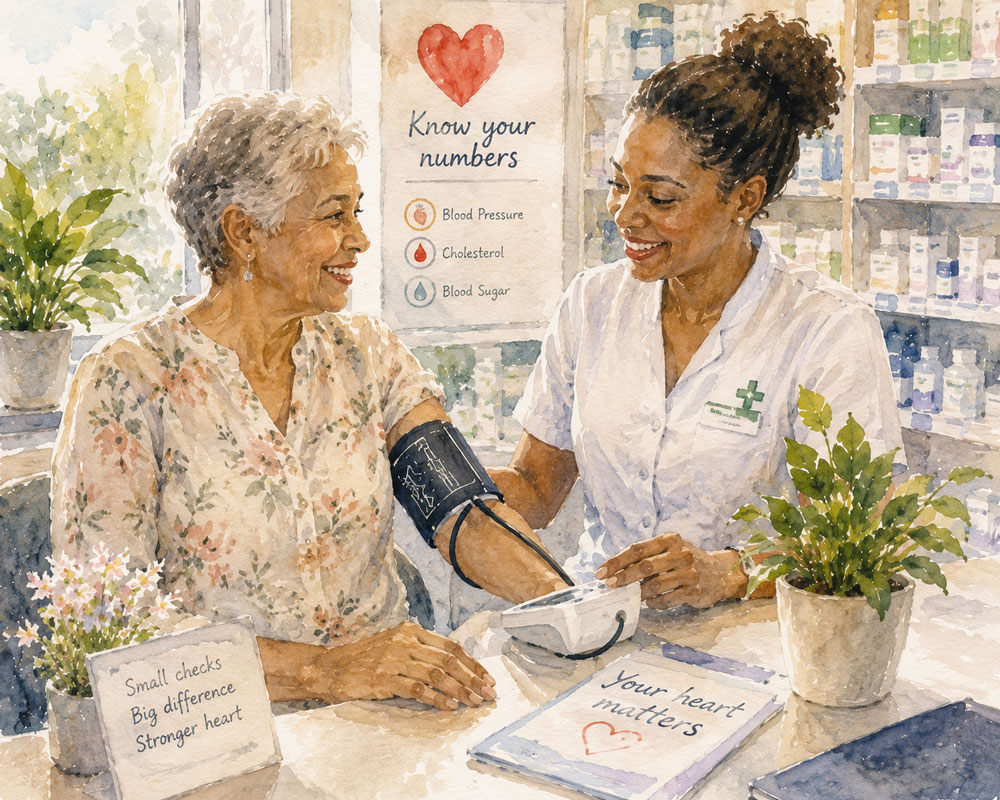
This might be the least glamorous longevity habit on the list. It may also be one of the most important. Know your blood pressure. Know your cholesterol. Know your blood glucose.
High blood pressure, elevated cholesterol and raised blood sugar can exist for years without making you feel particularly unwell, and that's the problem. You can feel perfectly fine while cardiovascular risk is quietly building in the background. Which is why Heart Awareness Month is such a useful reminder to get checked.
A basic health screening can give you important information about:
- blood pressure;
- cholesterol;
- blood glucose;
- weight, BMI and waist measurement, where appropriate.
This isn't about becoming obsessed with numbers, it's about information. If everything looks good, excellent. You have a baseline and another reason to keep looking after yourself. If something isn't where it should be, you've discovered it, and can speak to an appropriate healthcare professional about what happens next.
That's infinitely more useful than simply hoping everything is fine because you feel fine. So here's one practical challenge for September and that is to book the check-up you've been putting off. Consider it a World Heart Day present to yourself. Not terribly exciting, but potentially very important.
5. Stay connected, and have something to get up for
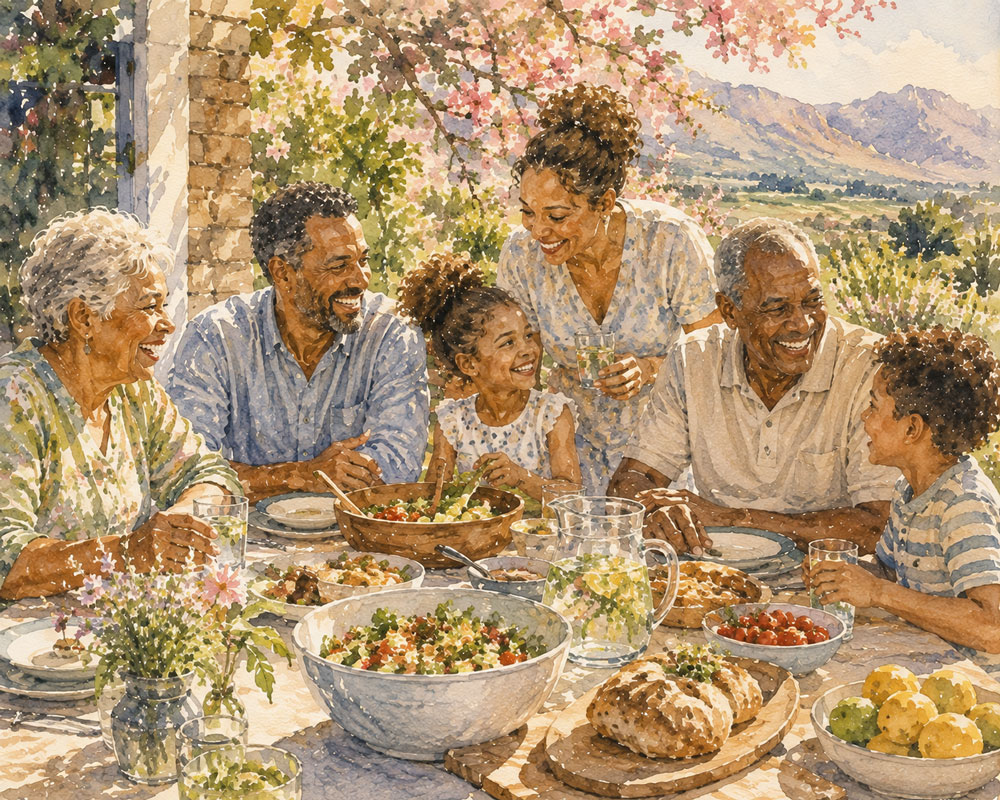
Now for the longevity habit we don't talk about nearly enough. Other people. In 2023, the US Surgeon General released a major advisory on loneliness and social isolation, highlighting growing evidence connecting poor social connection with serious health consequences, including increased cardiovascular risk.
In other words, relationships aren't simply nice things to have around the edges of a healthy life. They're part of a healthy life. Again, look at many communities associated with longevity and you'll find strong social structures. People eat together. Families remain connected. Neighbours know each other. People belong to groups, communities and traditions. And many have something else that matters enormously: purpose.
The Okinawans call it ikigai. In Costa Rica's Nicoya region, it's plan de vida. A reason to get up in the morning, and that reason doesn't have to change the world. It might be your children, or your grandchildren. The garden, your work, or your pets. Creativity such as painting, or teaching something you love. Volunteering at a shelter or building something new while learning something.
Making Sunday lunch for everyone whether they asked for it or not, purpose is personal, and so is connection, but both deserve a place in the health conversation.
This spring, please call the friend you've been meaning to call or start to eat together without everyone staring at a screen. Go and join the walking group or take the class you've been dying to do since high school. But most importantly check on someone who has gone quiet and invite them for coffee. Sometimes looking after ourselves starts by remembering that we're not supposed to do life entirely alone.
6. Let spring reset your stress

Stress isn't automatically bad. A little stress helps us respond, perform and occasionally get the tax return submitted before the deadline, but chronic stress is different. When your body spends too much time in a heightened stress state, it can affect sleep, blood pressure, mood and other aspects of physical health.
The answer isn't to eliminate stress completely. Unless you've discovered a way of eliminating traffic, deadlines, bills, family WhatsApp groups and people who say “quick meeting?” at 4:55 pm, that's probably unrealistic. What we can do is become better at coming back down. That looks different for everyone. For some people, it's exercise, and others it is gardening, prayer, music, cooking, breathing exercises, reading, or sitting outside with a cup of tea.
Walking somewhere green without turning the walk into another performance metric, because nature is particularly good at reminding us that not everything needs to happen immediately.
Spring gives us a wonderful excuse to get outside again, so use it.
The goal isn't perfect calm. It's creating regular moments when your body gets the message: We're okay. You can stand down now.
A spring footnote: don't let allergy season derail you
There is one South African spring reality worth mentioning because it can quietly interfere with several of the habits above and that is Allergy season.
Seasonal allergic rhinitis commonly flares during spring as pollen levels rise. Sneezing, congestion, itchy eyes and sinus pressure are irritating enough, but allergies can also interfere with sleep, energy and your ability to get outside and move. Exactly the things we're trying to protect.
A few simple strategies can make the season easier:
- Check local pollen levels through resources such as The Real Pollen Count.
- Take extra care on dry, warm and windy days when pollen levels may be higher.
- Shower and change clothes after spending significant time outdoors.
- Speak to your healthcare provider about appropriate allergy management if symptoms are persistent or disrupting your sleep.
The point isn't to make allergies another wellness project. It's simply to manage the seasonal things that get in the way of the healthy habits you're trying to build.
Where natural wellness fits in
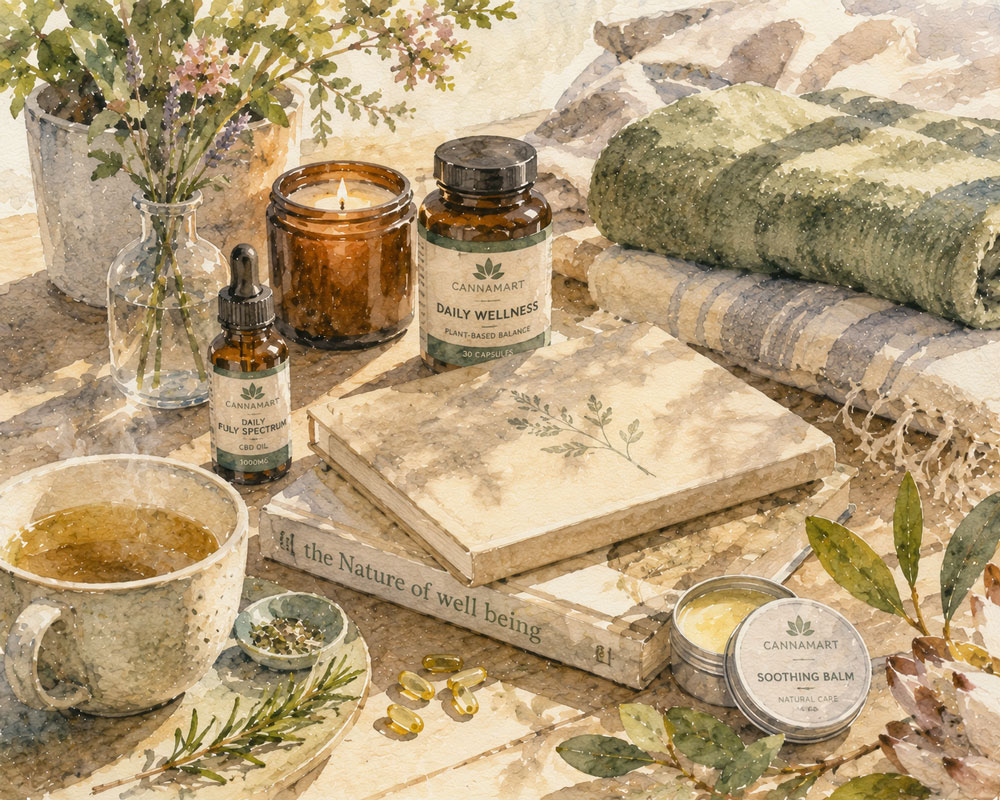
At Cannamart, we believe there is room for natural and plant-based wellness within a healthy lifestyle. But we also believe in keeping that role in perspective. No oil, tincture, herbal blend or supplement replaces the fundamentals we've explored here.
Movement, nourishing food, good sleep, meaningful connection, stress management and knowing your health numbers do the heavy lifting.
Wellness products can instead become part of the routines people build around those fundamentals.
Perhaps that's a deliberate evening wind-down, or a quiet moment in a busy day, or even a post-movement self-care routine. Simply becoming more intentional about the products you choose to bring into your everyday life. And if you are exploring plant-based wellness products, don't choose something simply because the label promises wellness.
Look a little closer, consider the format, and investigate if an oil, capsule, topical or another format realistically suit the way you live? And always remember to read the ingredients.
If the product contains cannabinoids, look for clear information about which cannabinoids are present and in what amounts. Pay attention to the labelling and directions for use, and look for transparency about what you're actually buying. Most importantly, ask yourself a very simple question: Why am I adding this to my routine?
The best wellness product isn't necessarily the most complicated, fashionable or expensive one. It's one you understand, can use appropriately and that makes sense within the bigger picture of how you look after yourself. Natural wellness should complement the foundations, not compete with them.
If you're managing a health condition, taking medication, pregnant or breastfeeding, speak to an appropriate healthcare professional before adding a new supplement or wellness product to your routine.
The most important habit of all? Start small with these six habits:
- Heart screenings.
- Vegetables.
- Strength training.
- Sleep.
- Friends.
- Stress.
It can suddenly sound like your spring reset needs its own project manager, it doesn't. One of the most encouraging lessons from longevity research is that healthy behaviours don't have to arrive as one enormous lifestyle overhaul, but they accumulate from every walk as does plant-forward meals. Every night you protect your sleep counts, as does meaningful conversation and every time you choose to rest instead of running yourself completely empty counts, as does every health check gives you information you didn't have before.
So don't wake up tomorrow and attempt to become a completely different human being by lunchtime. Pick one thing. Take a 20-minute walk after dinner, add another vegetable to tonight's meal, go to bed half an hour earlier, phone your friend, dust off the dumbbells or finally book that health screening. It doesn't really matter where you begin. What matters is that you do.
Spring doesn't arrive overnight either. It begins quietly, with a little more light, one warmer afternoon, a new leaf and then another. Perhaps that's a better way to think about longevity. Not as a frantic attempt to stop getting older, but as the gradual result of the choices we make along the way. Choices that help us remain strong, capable, curious, connected and very much alive as the years pass. This September, give your heart a little more attention and your future self something to thank you for. A longer, healthier life isn't built in a day. It's built, little by little, in the way we choose to live each one.
References & Further Reading
- Heart and Stroke Foundation South Africa. Heart Awareness Month.
- South African Government. Heart Awareness Month.
- World Heart Federation. World Heart Day.
- Li Y, et al. “Impact of Healthy Lifestyle Factors on Life Expectancies in the US Population.” Circulation. 2018.
- Harvard T.H. Chan School of Public Health. 5 healthy habits may increase life expectancy by a decade or more.
- Li Y, et al. “Healthy lifestyle and life expectancy free of cancer, cardiovascular disease, and type 2 diabetes.” BMJ. 2020.
- Harvard Health Publishing. Longevity: Lifestyle strategies for living a healthy, long life.
- Blue Zones. Research evidence and lifestyle habits.
- American Heart Association. Life's Essential 8. 2022.
- Lloyd-Jones DM, et al. “Life's Essential 8: Updating and Enhancing the American Heart Association's Construct of Cardiovascular Health.” Circulation. 2022.
- U.S. Surgeon General. Our Epidemic of Loneliness and Isolation. 2023.
- World Health Organization. Physical activity guidelines.
- Allergy Foundation South Africa. Seasonal allergies: diagnosis and management.
- University of Cape Town. The Real Pollen Count.
Disclaimer: This blog supports responsible cannabis use. The information contained in this article is for educational and informational purposes only and is not intended as health or medical advice. Always consult a physician or other qualified health provider regarding any questions you may have about a medical condition or health objectives.
Our latest content
Check out what's new in our company !