Human Rights Day in South Africa is rooted in something powerful: the right to dignity, equality and participation.
Participation. Not just the right to exist under the law, but the right to engage with it.
Right now, our government has invited public comment on proposed cannabis legislation and regulatory frameworks following the Constitutional Court ruling and the Cannabis for Private Purposes Act. That invitation matters more than most people realise.
Because rights are not static. They evolve through conversation. And conversation requires education.
From Stigma to Policy: A Moment of Responsibility
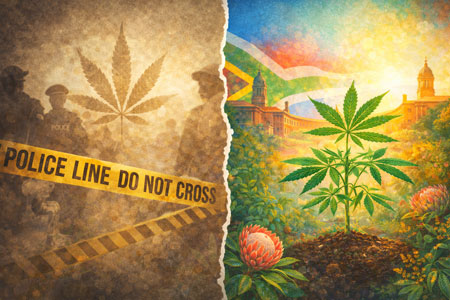
For decades, cannabis in South Africa was framed almost exclusively through criminalisation. Then came constitutional change. Then legislation. Now, implementation and regulation.
We are in a transition phase.
Proposed regulations aim to clarify cultivation limits, possession boundaries, and broader structural controls. These decisions will shape how cannabis exists in our society. Culturally, economically and personally.
But here’s the thought-provoking part:
How can citizens meaningfully comment on legislation if they don’t understand the plant, the science, the risks, the benefits, and the broader wellness context?
Education is not optional in moments like this. It is essential.
Human Rights and Health Autonomy
At its core, Human Rights Day asks us to reflect on dignity.
Health autonomy. The ability to make informed decisions about what supports your body and mind. This is deeply tied to dignity. But autonomy without knowledge can quickly become confusion.
Holistic living is not about rebellion. It is about responsibility.
Responsible cannabis use, where legal, requires understanding:
The difference between THC and CBD.
How the nervous system responds to stress.
Why dosage, format and context matter.
The legal boundaries that must be respected.
When adults are educated, stigma decreases. Panic decreases. Harm decreases.
And public discourse improves.
Why Public Comment Matters
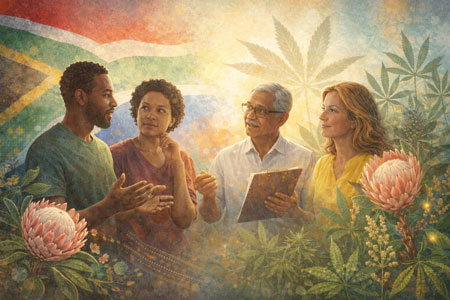
Public comment periods are not symbolic gestures. They are democratic tools.
When citizens engage thoughtfully:
Lawmakers receive grounded, real-world perspectives.
Regulatory blind spots are identified.
Consumer protection improves.
Industry accountability strengthens.
But meaningful input requires calm, informed voices, not reactionary noise.
Imagine the difference between:
“Cannabis should just be free for everyone.”
Versus:
“How will these proposed cultivation limits affect responsible adult users in rural areas? What safeguards ensure clarity between private use and commercial activity?”
One is emotional. The other is constructive.
Education transforms the quality of civic participation.
Holistic Living as Social Change

We often think of activism as loud. Sometimes it is.
But sometimes activism looks like:
Reading the draft legislation.
Submitting a respectful public comment.
Learning before sharing.
Choosing safety and compliance over shortcuts.
Holistic living is not just green juices and yoga mats. It is conscious citizenship.
It asks:
How do my choices affect my community?
How do I protect my rights while respecting the law?
How do we build a cannabis culture that prioritises education over hype?
If South Africa is to lead responsibly in the global cannabis conversation, we cannot rely on trends. We must build a culture of informed adults.
The Bigger Picture
Human Rights Day is not about cannabis. It is about dignity. But dignity includes the right to informed health decisions. It includes the right to participate in shaping legislation. It includes the right to ask questions without shame. Cannabis education is not about promoting use. It is about promoting understanding. And understanding is power. So this Human Rights Day, consider this your gentle nudge:
Read.
Ask.
Learn.
Engage.
Because rights are strongest when citizens are informed, and the future of cannabis in South Africa will be shaped not only by policymakers, but by educated voices willing to participate.
Your voice is part of that story.
Disclaimer: This blog supports responsible cannabis use. The information contained in this article is for educational and informational purposes only and is not intended as health or medical advice. Always consult a physician or other qualified health provider regarding any questions you may have about a medical condition or health objectives.
Our latest content
Check out what's new in our company !