Every so often you stumble on a fact that rearranges the furniture in your head. Here's ours for the week: Queen Victoria (Empire-ruling, permanently-unamused, "we are not amused" Queen Victoria) was quite possibly getting a monthly cannabis tincture for her period pain.
Not on the sly, or smuggled in by a rebellious lady-in-waiting. Prescribed. By her own physician, a very respectable Victorian doctor named Sir John Russell Reynolds, who went on record calling cannabis one of the most valuable medicines we possess. For roughly thirty years, the most powerful woman on the planet reportedly managed her cramps with the same plant that would, a few decades later, get ordinary women arrested.
Once you notice that thread, you can't stop pulling it. Because it turns out women and cannabis go way back, and the relationship is far more interesting, far more South African, and far more relevant to right now than the tie-dye stereotype suggests.
The herbalists nobody wrote down
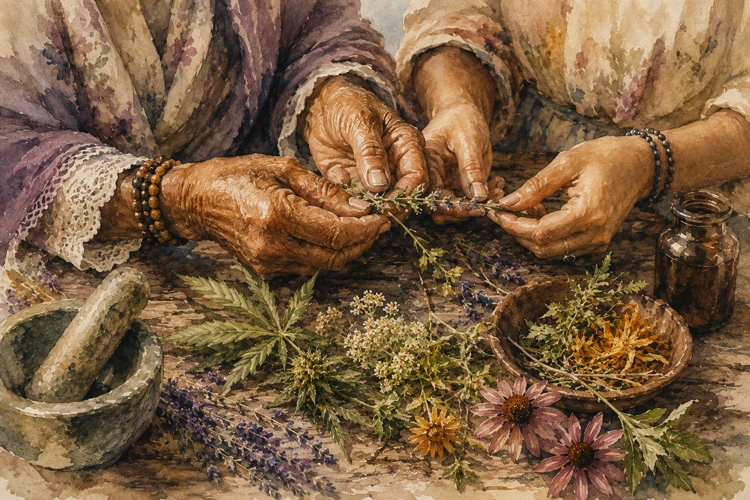
Long before Victoria's tincture, the plant was already women's work.
Wind the clock back three and a half thousand years, and you'll find the ancient Egyptians grinding cannabis into honey for period pain and childbirth. During the reign of Hatshepsut, no less, a woman who crowned herself pharaoh fourteen centuries before Cleopatra and clearly did not consult a man about it. Skip forward to medieval Europe, and it's midwives and herbalists (the original, unlicensed, deeply inconvenient-to-the-authorities women's health network) folding cannabis into remedies for the aches nobody else took seriously.
There's a pattern here, and it's a little cheeky. For most of human history, "women's pain" was the medical world's junk drawer. Real, constant, and comprehensively ignored. So women did what women do. They sorted it out themselves, quietly, with the plants in reach, and passed the knowledge along the back channels, mother to daughter, midwife to mother, no footnotes required.
Which is precisely why so little of it got written down. History tends to record the men who "discovered" things. It rarely records the women who already knew.
Meanwhile, in South Africa
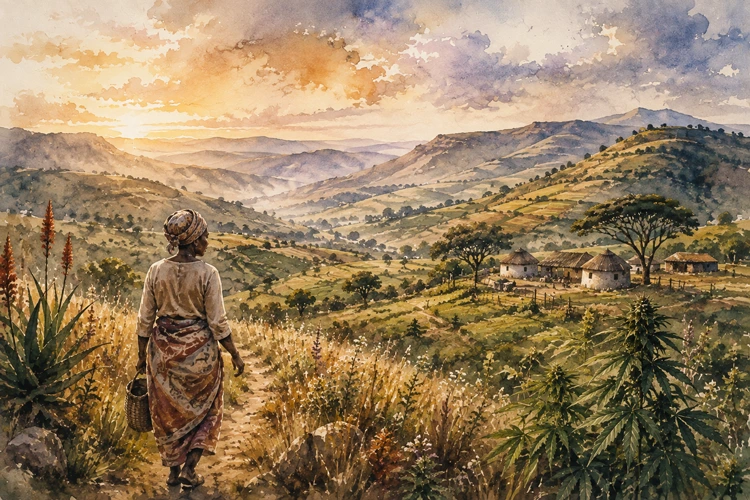
Here's where the story stops being a charming European curiosity and lands squarely at home.
There was a time when dagga was as ordinary in South Africa as biltong and beskuit. Smoked, brewed, used in traditional medicine, and folded into the everyday for centuries before anyone dreamed of banning it. The Sotho reportedly used it to help women through childbirth. It was woven into the fabric of daily life long before 1652.
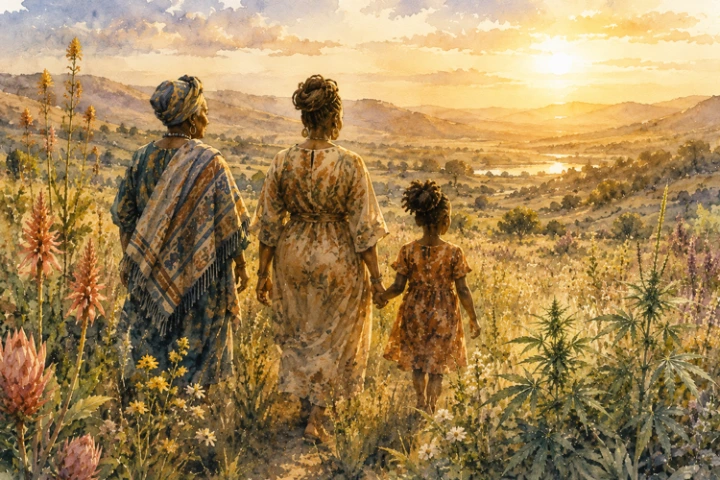
But the part that genuinely stopped us? For decades, in the hills of KwaZulu-Natal and the Eastern Cape, cannabis was a serious cash crop. It was grown, overwhelmingly, by women. Not as a fringe hobby. As income. Entire generations of children were raised, clothed, and sent to school on the money their mothers and grandmothers coaxed out of those plants. Hundreds of thousands of growers, keeping families afloat with a crop the state had declared contraband.
And the state noticed. Decades before Nixon coined "the war on drugs," South Africa was already running one, and it went straight for the source. Police squads were sent into rural areas to destroy the crops, which meant, in practice, that they were sent after poor families and especially the women growing them. The men in Geneva and Pretoria drew up the laws, but the women in the valleys paid for them.
You can hold two facts in your hands at once here, and they're both true. The plant was a lifeline. And tending it could cost you everything.
The plot twist nobody saw coming
And then, in a turn worthy of the cheekiest telenovela, the law changed its mind.
In 2018, the Constitutional Court decided that what an adult does in the privacy of their own home, including growing and using cannabis, was, frankly, none of the state's business. In 2024, the Cannabis for Private Purposes Act wrote that private use into law. The very thing that had put women in handcuffs became, more or less overnight, a legitimate lifestyle with conferences, branding, and people saying the word "wellness" in italics.
Cue the gold rush. In his 2025 State of the Nation Address, President Ramaphosa announced he wants South Africa to lead the global commercial production of hemp and cannabis. Suddenly there are symposiums at the Sandton Convention Centre, hemp permits by the thousand, and market forecasts throwing around numbers like R40 billion.
Which brings us, at last, to the question this whole story has been walking toward.
The grass ceiling
Because here's the thing about a legal industry rising up on foundations women laid in the dark, and that is it doesn't automatically hand them the keys.
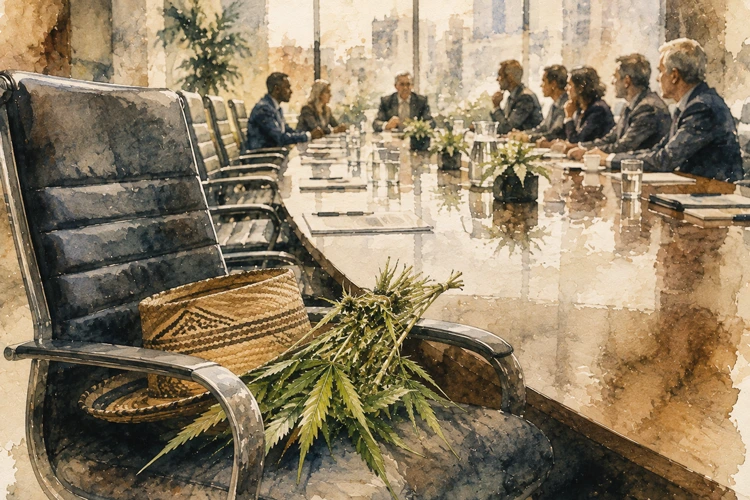
Globally, the pattern is almost comically on-brand. Women have clawed their way up to close to 40% of executive roles in the legal cannabis industry. A genuinely impressive figure, well above the roughly one-in-five you'll find across ordinary business. And yet women own only about 16% of cannabis companies. Read that twice. They're allowed to run the place, but they are much less often allowed to own it. The industry even coined a term for the barrier, the "grass ceiling", which is either delightful or depressing depending on how much of it you've personally headbutted.
Dig into why, and it's the same old furniture, that a "cannabis bro" culture in the boardrooms and grow rooms, a chronic shortage of women to mentor the next women up, and (the big one) money. Banks are twitchy about cannabis, investors twitchier still, and the funding that does exist has a well-documented habit of flowing toward men in fleece vests. Progress, yes. Parity, not yet.
Who cashes in, and who gets written out again
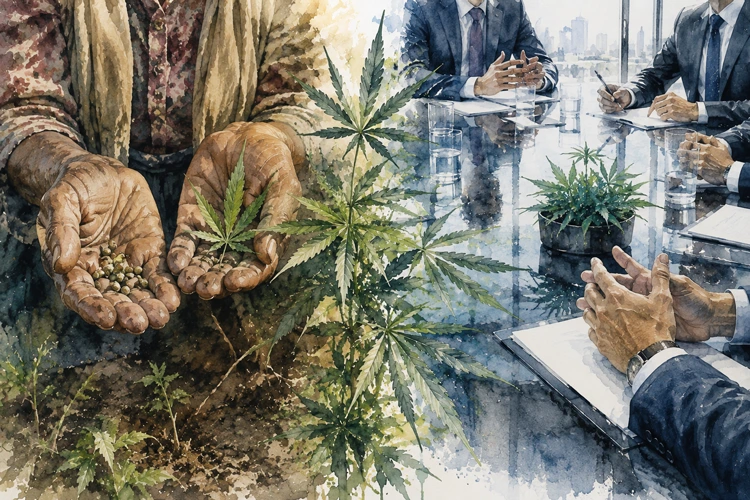
And in South Africa, the plot has a particularly sharp edge.
The 2024 law legalised using cannabis but kept commercial selling almost entirely locked up, a maddening little paradox the lawyers politely call "legal use, illegal enterprise." Meanwhile the informal market rolls on, worth an estimated R36 billion. So the money is real. The only question is whose pockets it lands in.
The early warning signs are not subtle. Academics tracking the boom have flagged the risk of "corporate capture". Big licensed operators, often tied to European partners, are stepping in to harvest an industry that rural communities spent a century keeping alive. It has, in the blunt words of one researcher, the whiff of an old and familiar pattern, that of extraction, dressed up in new packaging.
And squarely in the path of that steamroller sits a very specific group of people. The large community of elderly women in the Eastern Cape who have been growing this plant, expertly, for their entire lives. Women who, in a country where nearly half of rural households are headed by women and unemployment sits above 30%, have been quietly running the most durable small-scale agricultural economy nobody officially acknowledged. They have the land, the knowledge, the genetics, and roughly a century of R&D. What they mostly don't have is a permit, a bank that will take their call, or a lawyer on retainer.
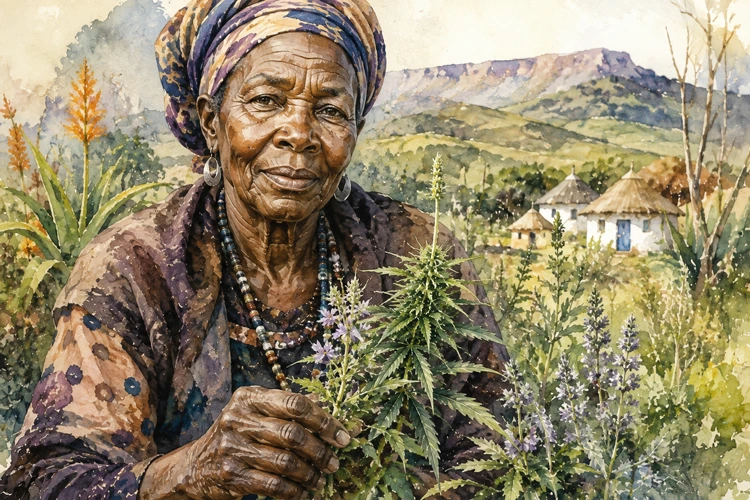
There's a genuinely hopeful version of this story, and it's on the table right now: proposals to formally recognise and license traditional growers, to bring them into the legal market instead of bulldozing past them. Whether that actually happens, or whether the women who built the industry get politely thanked and shown the door while someone in a blazer floats the IPO, is being decided in committee rooms as you read this.
It is, when you zoom out, the exact same story as Queen Victoria's tincture. The plant hasn't changed. The question never really was about the plant. It's about who's allowed to benefit from it, and who gets quietly written out of the record. The way the midwives were, the way the growers nearly were, the way it keeps almost happening.
The point, wrapped in a leaf
There's a lovely symmetry to landing all this in Women's Month. Because the through-line was never really about a plant at all.
It's about the enormous, uncredited, load-bearing work women have always done in the background (the healing, the growing, the holding-it-all-together) usually without permission, frequently against the law, and almost never with the thanks. Queen Victoria got her tincture and her comfort. The women of the Eastern Cape got a police raid, and are now negotiating for a seat at the table of an industry they personally kept breathing.
So here's our thoroughly whimsical closing suggestion. Whatever you think of cannabis (medicine, mischief, or simply not your thing) spare a thought this month for the herbalists nobody wrote down and the growers nobody thanked. The women who knew things the official record ignored, kept knowing them anyway, and are still, right now, insisting on being counted.
They were right about a great many things as they usually are.
Happy Women's Day.
Here's to the ones who always knew, and to making sure they finally get their cut.
A gentle note: this is a bit of history, culture, and current-affairs musing, not medical, legal, or financial advice. Cannabis law in South Africa is still very much a moving target. The plant affects everyone differently, and neither this blog nor its author is qualified to advise you on any of it. Enjoy the story, not as a prescription.
Disclaimer: This blog supports responsible cannabis use. The information contained in this article is for educational and informational purposes only and is not intended as health or medical advice. Always consult a physician or other qualified health provider regarding any questions you may have about a medical condition or health objectives.
Our latest content
Check out what's new in our company !