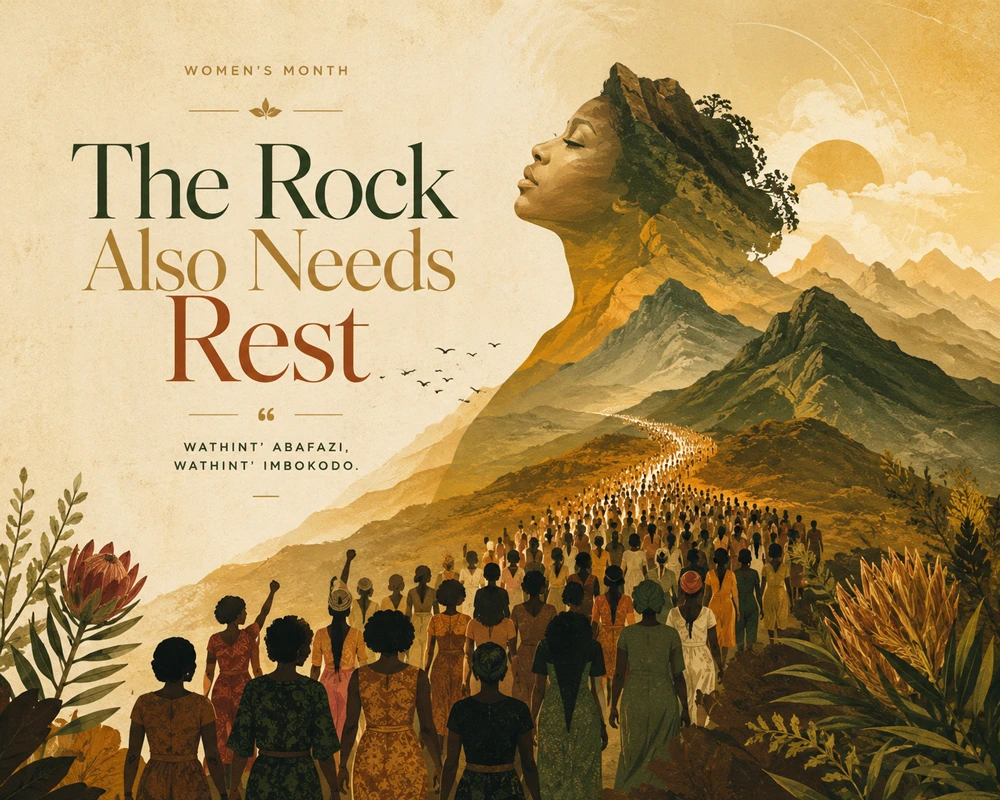
Every August, South Africa honours the women who marched to the Union Buildings on 9 August 1956. Their message of courage lives on in the words, Wathint' abafazi, wathint' imbokodo. You strike a woman, you strike a rock.
Over time, imbokodo has come to symbolise resilience. But resilience was never meant to mean endless endurance. Even the strongest foundations need care, recovery and rest.
This Women's Month, it's worth remembering that self-care isn't the opposite of strength. It's what helps sustain it.
That idea becomes especially important when we look at two things many women experience together: stress and changes in their skin.
CBD has become an increasingly popular ingredient in skincare and wellness products, but where does it genuinely fit into a healthy self-care routine? Let's look at what the science says, and how to choose products responsibly.
Your skin keeps the receipts
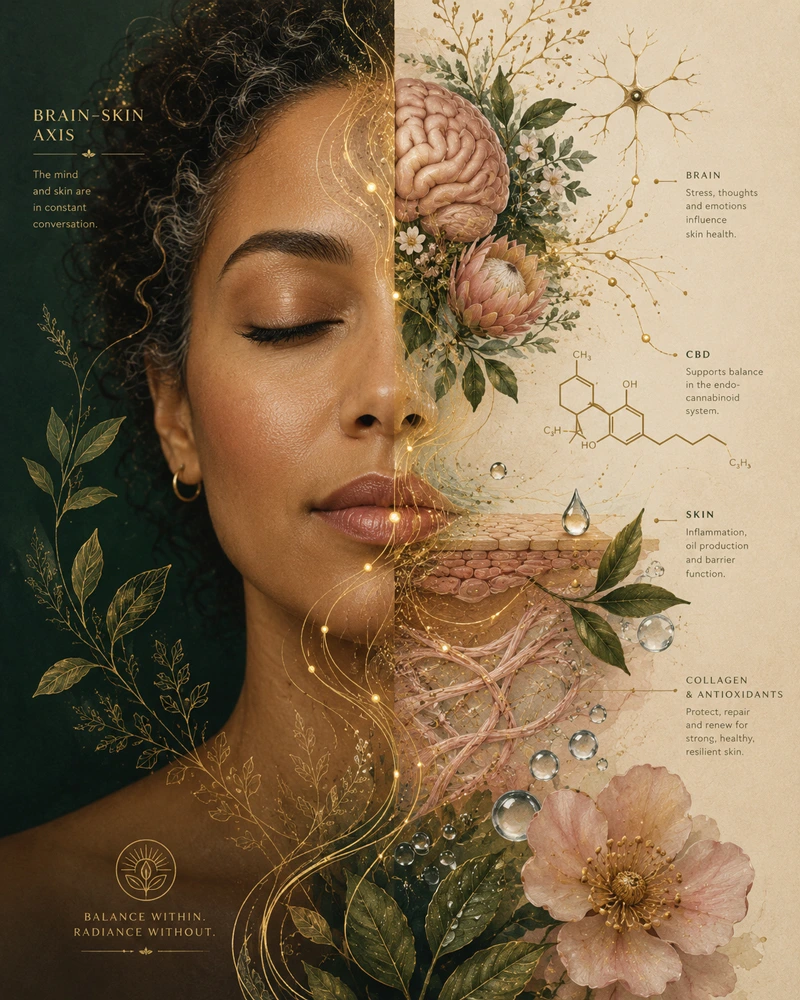
We tend to file stress under "mental" and skin under "cosmetic," as if they live in different departments. They don't. Dermatologists call the connection the brain–skin axis, and it's one of the most well-documented relationships in the field.
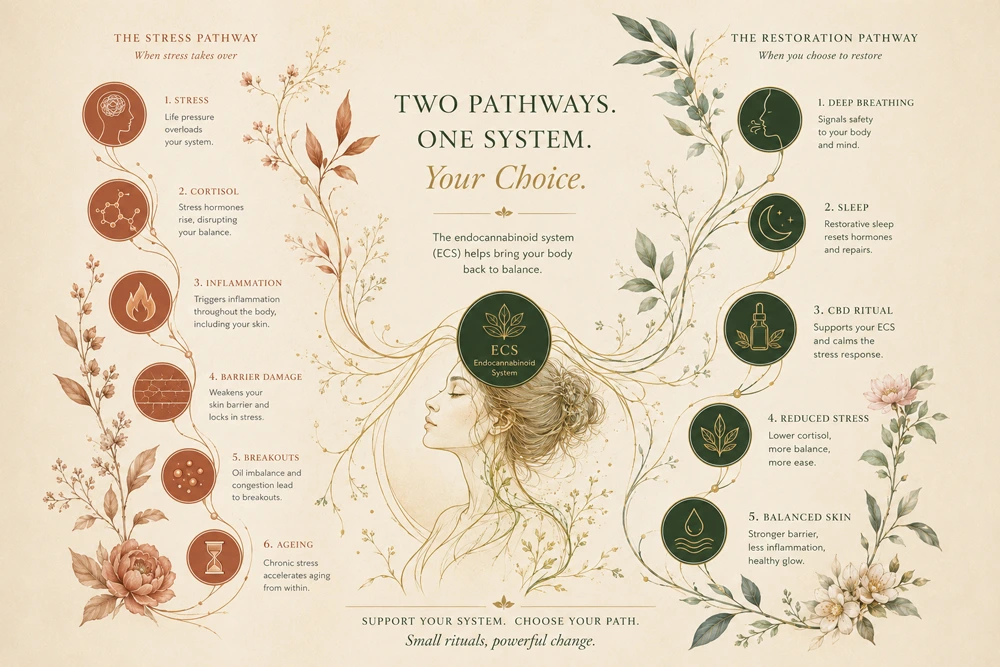
Here's the short version. When you're under sustained pressure, such as a deadline, a diagnosis, or just a month when everyone needs something from you, your brain signals the adrenal glands to release cortisol, the body's primary stress hormone. Cortisol is useful in a genuine emergency. Chronically elevated, it becomes corrosive, and your skin is one of the first places it shows.
Research over the past two decades has mapped how this plays out. Elevated cortisol stimulates the oil glands, which is why "stress breakouts" appear across all skin types and at any point in the cycle, often in people with no history of acne. It weakens the skin barrier (the thin protective layer that locks moisture in and keeps irritants out), increasing water loss and leaving skin drier, more reactive, and slower to recover. It ramps up inflammation, which drives redness and flares of conditions like eczema and psoriasis. And over the long term, it accelerates ageing at a cellular level as cortisol breaks down collagen and increases free-radical damage, the twin culprits behind fine lines and loss of firmness.
One landmark line of research even found that women under chronic stress showed cellular ageing equivalent to years of additional biological age.
Read that again, because it reframes the whole conversation. Dullness, breakouts, sensitivity, a barrier that suddenly can't cope with products it used to tolerate. These aren't personal failures of discipline or the wrong serum. Very often, they're your skin reporting on your stress levels. The face is keeping the receipts.
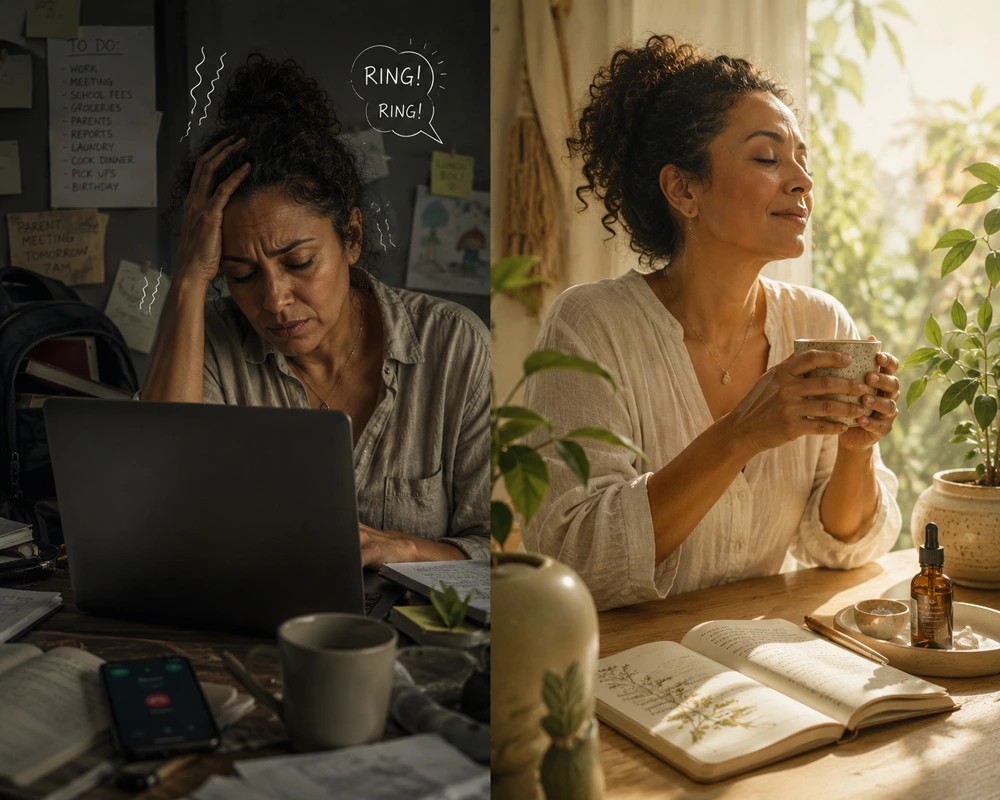
Which means the most powerful "skincare" intervention available to a stressed woman isn't always found in a bottle. It's found in whatever lowers the cortisol. And this is exactly where a holistic approach (and, for many, CBD) enters the picture.
The balancing system you were never taught about
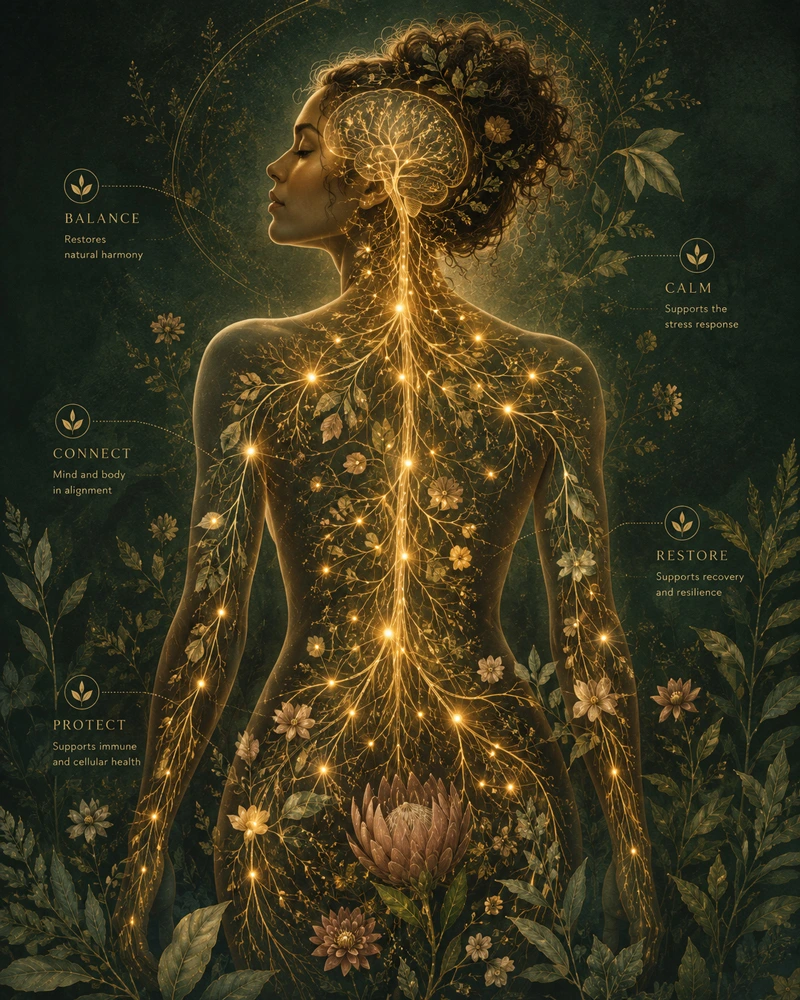
Here's something most of us never learned in biology class. The human body runs a regulatory network called the endocannabinoid system (ECS). Its entire job is homeostasis, keeping things in balance. It helps modulate sleep, mood, immune response, pain, inflammation, and the stress response itself. Your body even makes its own cannabinoids to do this work.
The ECS isn't only in your brain. It runs through your skin too. Skin cells carry cannabinoid receptors (CB1 and CB2), along with related channels and pathways, and this network helps govern oil production, inflammation, moisture, and skin-cell renewal. When it's functioning well, skin stays balanced. When it's disrupted (by stress, environment, or illness), that balance tips, and the dermatological problems follow.
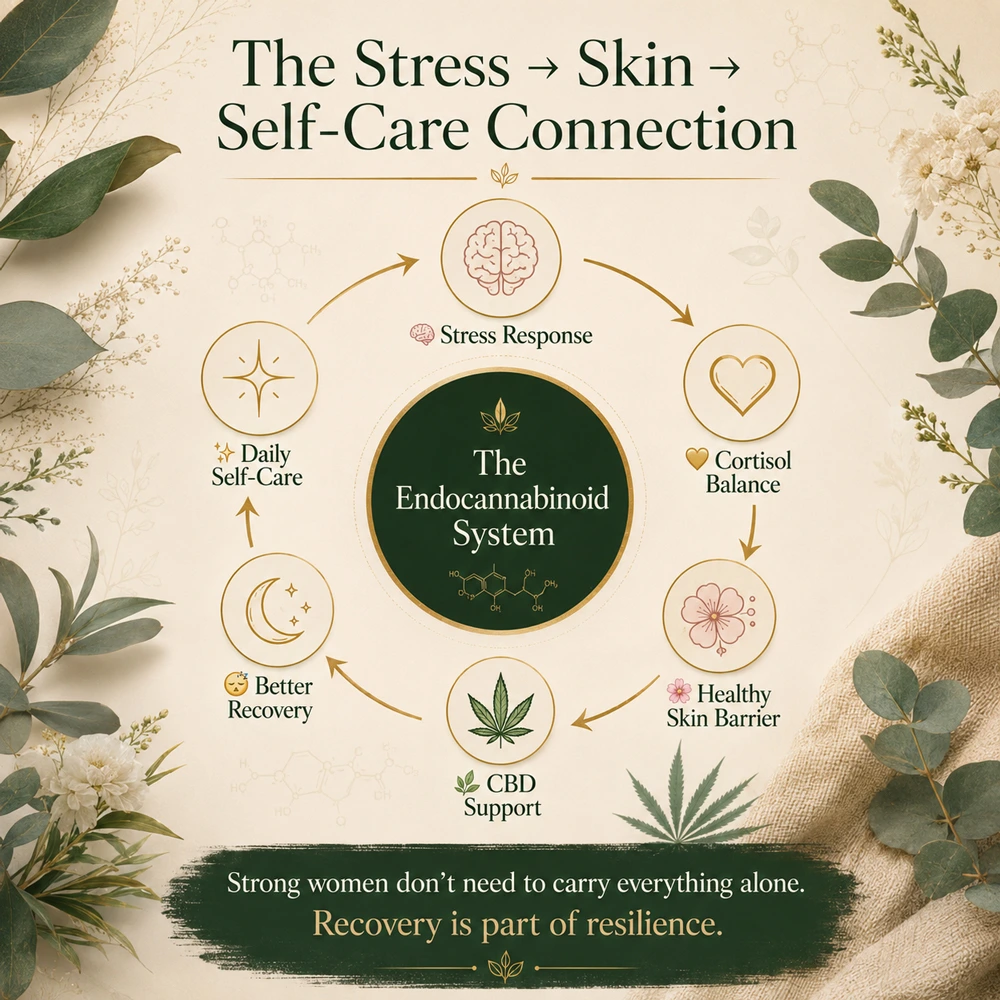
The ECS is, elegantly, the connective tissue between the two halves of this article. It regulates both your stress response and your skin's equilibrium. That's not a marketing coincidence. It's the biological reason a single plant compound keeps turning up in conversations about both calm and complexion.
What CBD actually does, and what it doesn't
Cannabidiol is a non-intoxicating compound from the cannabis plant. Unlike THC, it won't get you high. What it does do is interact with that endocannabinoid system, and researchers have spent the last several years cataloguing the effects. Let's be precise, because precision is what protects you as a consumer.
On skin, the evidence is genuinely promising. A growing body of laboratory and early clinical research points to CBD having anti-inflammatory, antioxidant, and moisturising properties, along with the ability to help regulate oil production. Reviews in the dermatology literature describe potential benefits for calming irritation, soothing redness, supporting the skin barrier, and countering the oxidative stress that contributes to ageing. For skin destabilised by cortisol, such as inflamed, oily-yet-dehydrated, reactive skins, that profile is a logical fit. The honest caveat is that most of this evidence is preclinical or from small studies. CBD is a promising supportive ingredient, not a proven cure for any skin condition.
On stress, the picture is real but more conditional. The best-designed human studies show CBD reducing acute anxiety (famously in simulated public-speaking tests), and some research suggests it may help recalibrate a dysregulated cortisol response rather than simply blunt it. That's encouraging. But the trials are mostly short, use specific (often high) pharmaceutical doses, and (tellingly for this article) women remain underrepresented in the research. CBD is not a replacement for prescribed anxiety medication, and it hasn't been tested head-to-head against one. Anyone managing a diagnosed mental-health condition should treat CBD as, at most, a possible complement to proper care, discussed with a doctor.
The grown-up summary is that CBD is a supportive ally with encouraging science behind it, sitting exactly at the stress-and-skin crossroads. Not a miracle, and not a substitute for medicine, sleep, or a therapist. Any brand that tells you otherwise is telling you something the evidence doesn't support.
The ritual is the medicine, too
Here's the part the product marketing tends to skip. When you take a CBD topical and slowly massage it into your face and neck at the end of a punishing day, the molecule is only half of what's working.
The other half is the ritual. Slow, deliberate touch activates the parasympathetic nervous system, the "rest and digest" state that is the physiological opposite of cortisol's fight-or-flight. The pause, the breath, the few minutes where nobody needs anything from you. That itself lowers stress. This is why a holistic self-care practice will always outperform any single ingredient. You're not just applying a product to your skin. You're signalling to your body that the threat has passed and it's safe to recover.
Now to build the ritual, and let CBD be one thoughtful element inside it rather than the whole story:
- Cleanse gently, not aggressively. A stressed barrier can't afford stripping. Warm water, a mild cleanser, no scrubbing.
- Slow down the application. Whatever you use (a CBD facial oil, balm, or moisturiser), warm it between your palms and massage upward for a minute or two. Breathe out longer than you breathe in. This is the nervous-system part.
- Protect by day. None of the above replaces sun protection, which remains the single most effective anti-ageing step available. Cortisol and UV both drive collagen loss. Don't hand them a second front.
- Guard the non-negotiables. Sleep is when skin repairs and cortisol falls. Caffeine and poor sleep push it back up. Movement, time outdoors, and actual boundaries around your time do more for both your skin and your stress than any serum.
- Notice what you're feeling. Self-care that only ever means buying something isn't the whole practice. Sometimes the most restorative thing is a phone call, a walk, or saying no.
The point of a holistic guide is this: CBD can be a thoughtful, evidence-informed tool. Recovery is the larger practice.
Which CBD products might suit your routine?
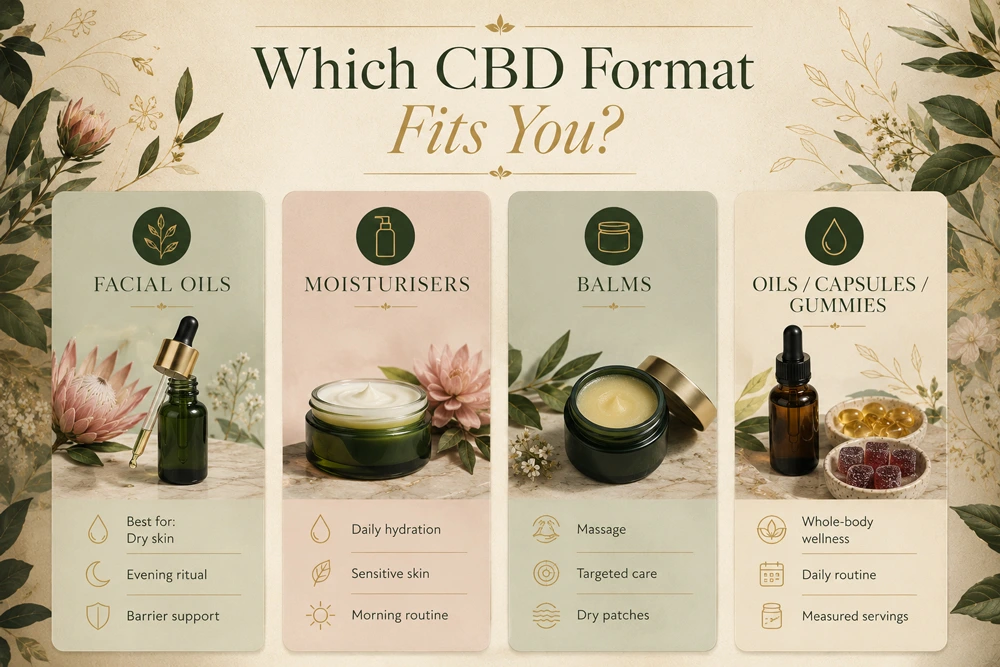
CBD products are not interchangeable. The best format depends on whether you want a skin-focused ritual, targeted topical care, or a measured wellness product. Start with the routine you can realistically maintain, then compare formulation, CBD content and intended use.
|
Product format |
May suit |
What to consider |
|
CBD facial oils |
Dry, tight or dull-feeling skin; slow evening rituals |
Apply a few drops after water-based products or mix with moisturiser. Choose a non-comedogenic carrier oil suited to your skin. |
|
CBD moisturisers |
Simple daily hydration and barrier support |
Use as the moisturising step in a morning or evening routine. Look at the full formula, not only the CBD claim. |
|
CBD balms |
Targeted dry areas or massage-based self-care |
Use on specific areas as directed. A body balm is not automatically suitable for facial skin, so check the label. |
|
CBD skincare sets |
A coordinated routine or an easy starting point |
Choose sets with complementary steps rather than several products that repeat the same function. |
|
CBD oils, capsules or gummies |
Measured daily wellness routines rather than topical skincare |
Compare CBD per serving, ingredients and instructions. Start cautiously, follow the label and speak to a healthcare professional if you take medication. |
A useful rule: choose topical products for a topical ritual, and treat ingestible formats as a separate decision. More CBD is not automatically better, and a product's format does not turn encouraging research into a guaranteed outcome.
How to Choose the Right CBD Product
Not every CBD product suits every routine. Before choosing one, consider a few practical factors:
Choose based on your goal
- Dry or dehydrated skin → CBD facial oils
- Daily hydration → CBD moisturisers
- Targeted dry areas or massage → CBD balms
- General wellness routine → CBD oils, capsules or gummies
Look beyond the CBD
CBD is only one ingredient. A quality formulation should also contain skin-supportive ingredients suited to your needs, while avoiding unnecessary irritants if you have sensitive skin.
Check the CBD content
Reputable brands clearly state how many milligrams of CBD each product contains. Avoid vague claims such as "hemp-infused" without specifying CBD content.
Buy from trusted retailers
Look for products with third-party Certificates of Analysis (COAs), transparent ingredient lists and clear usage instructions.
Exploring several product options side by side can make it easier to compare formulations, CBD strength and intended use before deciding which product best suits your routine.
Choosing CBD wisely in South Africa
This is where being a savvy South African consumer matters, because our market has real rules, and plenty of products that ignore them.
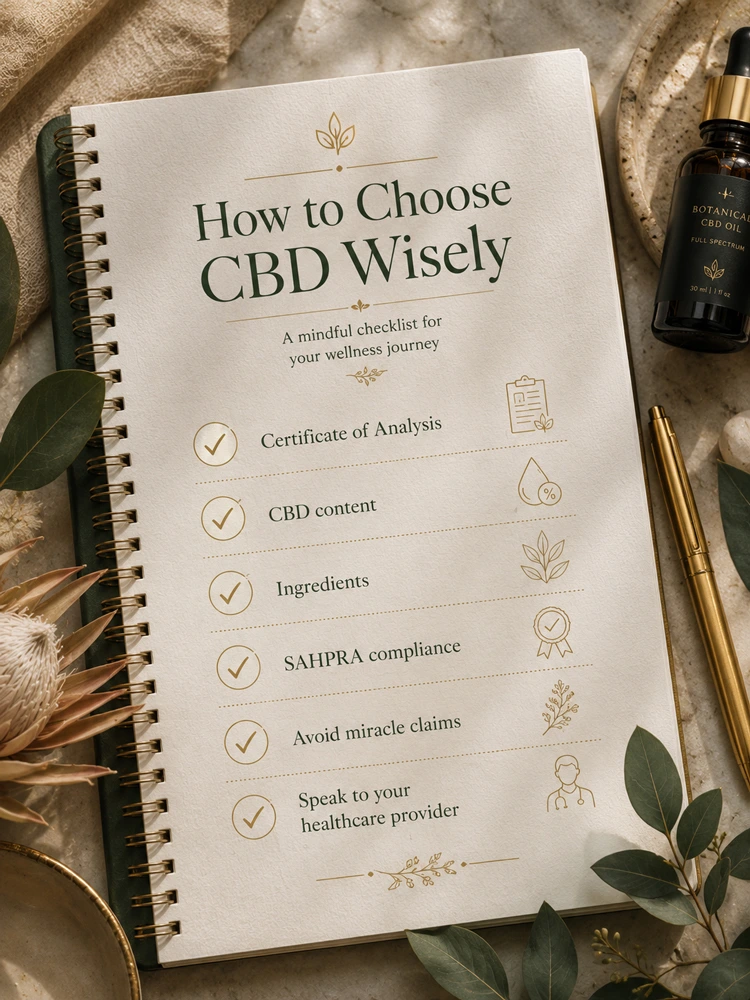
CBD here is not an unregulated wellness free-for-all. It's overseen as a health product, largely under the framework the South African Health Products Regulatory Authority (SAHPRA) set out in its 2019 exemption, which placed limits on low-dose CBD products (commonly cited as a maximum of around 20 mg per day for ingestible). Topicals and cosmetics fall under the Foodstuffs, Cosmetics and Disinfectants Act, and here's the crucial distinction. A cosmetic in South Africa is only permitted to make claims about local, temporary effects. The moment a product promises to treat, cure, or heal (acne, eczema, anxiety, anything medical), it crosses into "medicine" territory and a different, far stricter regulatory bar.
That regulatory line is actually a gift to consumers, because it gives you a lie-detector. Use it:
- Be suspicious of medical promises. A trustworthy South African CBD skincare brand will say its products soothe, calm, hydrate, or support your skin. A brand claiming to cure acne or treat anxiety is either non-compliant or overselling, and probably both.
- Demand a Certificate of Analysis (COA). This is third-party lab testing that confirms how much CBD is actually in the product and that THC sits within legal limits. Reputable brands publish it. No COA, no confidence.
- Check the actual CBD content. "Infused with hemp" on the front of the pack can mean almost nothing. Hemp seed oil is a lovely moisturiser but contains negligible CBD. Look for the milligrams.
- Read the full ingredient list. CBD works best inside a well-formulated product. If the rest of the formula is harsh or stripping, the CBD can't rescue it.
- Talk to a professional if you're on medication. CBD can interact with certain medicines, and there isn't enough safety data for pregnancy or breastfeeding. A quick word with your doctor or pharmacist is the responsible move.
A brand willing to tell you what its products can't do is usually the one worth trusting with what they can.
Recommended product categories
For a skin-first self-care routine, begin by comparing CBD facial oils, moisturisers and balms. A skincare set may suit someone who prefers a coordinated routine, while CBD oils, capsules or gummies belong in a separate daily wellness conversation and require closer attention to serving size, ingredients and possible medicine interactions.
Ready to build your CBD self-care routine? Browse Cannamart's range of CBD facial oils, moisturisers, balms, gummies, capsules and wellness oils to compare formulations, CBD strengths and product features, and find the option that best suits your lifestyle.Honouring the rock
There's a version of Women's Month that asks women to be celebrated for exactly the thing that's exhausting them. For carrying, enduring, never cracking. That's not the version worth keeping.
The women who marched in 1956 weren't asking to carry more. They were refusing a system that treated their bodies and their movement as things to be controlled and used up. The truest way to honour that legacy isn't to prove you can run yourself into the ground gracefully. It's to insist, as they did, that you are worth more than your usefulness to everyone else.
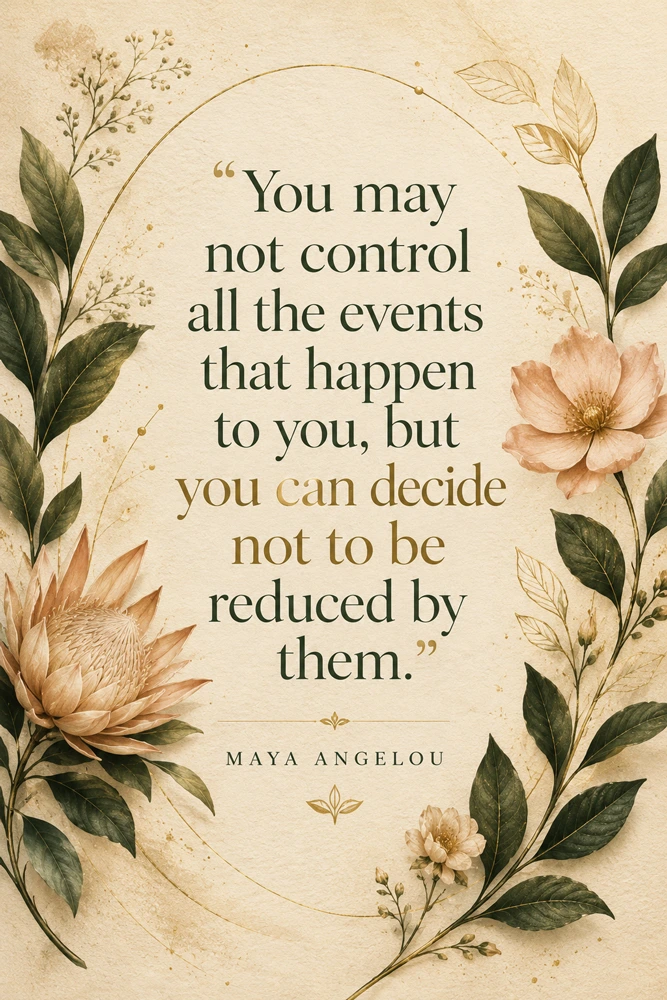
Maya Angelou understood this in her own register. In Phenomenal Woman, she located a woman's power not in fitting anyone else's idea of beauty, but in the unbought certainty of how she carries herself. Self-care, at its root, is a way back to that self-possession: tending to yourself not to become more useful or presentable, but because the woman doing all the carrying is herself worth caring for.
Your skin will tell you when the pressure has been too much for too long. So will your sleep, your patience, your body. Listening to those signals isn't weakness or vanity. It's the maintenance that keeps a strong woman strong. Whether that looks like a few slow minutes with a CBD balm and your own breath, an honest boundary, or a proper night's sleep, the principle is the same.
The rock is not supposed to crack. But that only holds if you let the rock rest.
Disclaimer: This blog supports responsible cannabis use. The information contained in this article is for educational and informational purposes only and is not intended as health or medical advice. Always consult a physician or other qualified health provider regarding any questions you may have about a medical condition or health objectives.
Our latest content
Check out what's new in our company !