“Is it my hormones?” It’s the question whispered before a period. During a hot flush. After snapping at someone you actually love. Again.
Come here. Let's think about this. When you cried because the barista spelt your name wrong… was it really your hormones? When you woke up at 3 am replaying a conversation from 2014… was that oestrogen? When PMS arrived like an uninvited houseguest with opinions… was progesterone plotting against you? Or, and stay with me, could it be stress wearing a hormone costume?
We’ve been taught to blame our hormones for everything. Mood swings? Hormones. Irritability? Hormones. Hot flushes? Definitely hormones. And yes, they are involved. But they are not rogue agents causing chaos for entertainment.
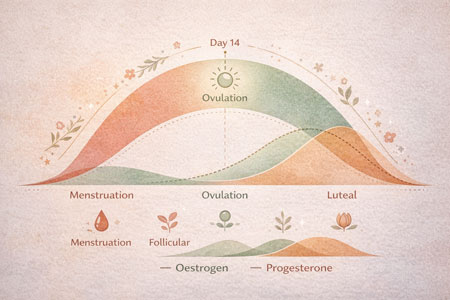
Oestrogen rises in the first half of your cycle. Many women feel clearer, more social, a little more “let’s reorganise the kitchen cupboards at 9 pm.” After ovulation, progesterone increases. Ideally, bringing calm, steadiness and deeper sleep.
That’s the plan.
Now enter modern life.
Deadlines. Notifications. Blood sugar dips. Emotional labour. That one group chat that should have been muted in 2021.
Cortisol, your stress hormone, doesn’t gently coexist with progesterone. It competes. When stress is chronic, progesterone can dip. Sleep becomes lighter. Inflammation increases. PMS can feel sharper. Perimenopause can feel like your internal thermostat is broken.
Suddenly, we say, “My hormones are a mess.”
Sometimes they’re just overwhelmed.
This is where the endocannabinoid system (ECS) quietly clears its throat.
Read more: What is the Endocannabinoid System?
The ECS is one of the body’s master balancing systems. It helps regulate stress response, mood, pain perception and sleep. Think of it as your internal mediator. The calm aunt at a family argument says, “Let’s all take a breath.”
Here’s the fascinating part: oestrogen appears to interact with this system. Endocannabinoid levels shift across the menstrual cycle. Which means your stress load and your hormones are not separate departments; they’re sharing office space.
So where does cannabis fit in, without promising miracles or selling fairy dust?
Cannabis is not a hormone replacement. It will not march in and fix oestrogen with a clipboard. But certain cannabinoids, particularly CBD, are being explored for their role in supporting stress regulation, inflammatory pathways and sleep quality.

For some women, a low-dose CBD oil during high-pressure weeks may feel grounding, like turning the nervous system volume down one notch. Others prefer evening gummies as part of a wind-down ritual. Topical formulations are often explored for localised discomfort, such as menstrual cramping.
Read more: A Natural Path to Balance.
The golden rule? Start low. Go slow. Track your cycle. Notice patterns. Your body is giving feedback, not drama.
And remember: plant support works best when the basics aren’t in chaos. Regular meals. Magnesium. Movement that isn’t punishment. Boundaries that protect your energy. Sleep that starts before midnight. (Yes, we said it.)
This International Women’s Day, perhaps the most radical thing we can do is stop speaking about hormones like they’re villains in a soap opera.
They are messengers.
If you’re irritable, exhausted, wired or weepy, your body is not malfunctioning. It’s communicating. The real question isn’t “What’s wrong with me?” It’s “What does my nervous system need?”
Read more: Cannabis for Emotional Balance.
Sometimes the answer is rest. Sometimes it’s better nutrition. Sometimes it’s saying no. And sometimes, when used legally and responsibly, cannabis may be one small, informed part of the support plan.
Read more: Bed, Bud and Beyond.
Your hormones are not plotting against you.
They’re reacting to the environment you’re living in.
And once you understand that my girl, you stop fighting your body and start working with it.
Now that’s modern wellness.
Disclaimer: This blog supports responsible cannabis use. The information contained in this article is for educational and informational purposes only and is not intended as health or medical advice. Always consult a physician or other qualified health provider regarding any questions you may have about a medical condition or health objectives.
Our latest content
Check out what's new in our company !