This piece was inspired by Andrew MacFarlane's article on Zootly, "Fired for THC at Work? The Law Might Be on Your Side," which got us thinking about how much the ground has shifted for South African workers, and how few of them know it.
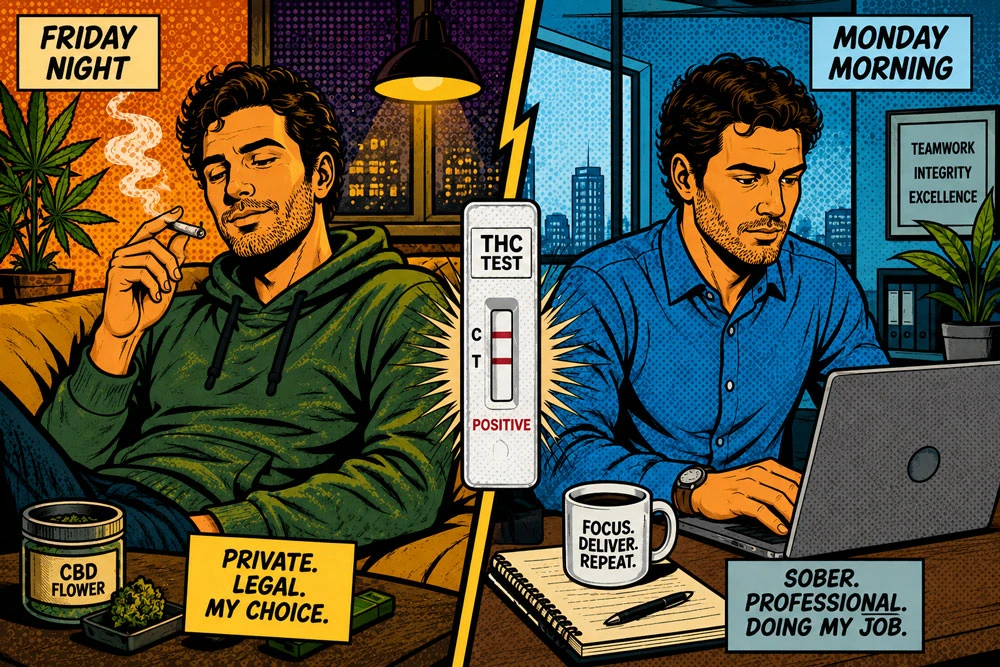
You have a joint at home on Friday night. Monday morning rolls around. You're sober, you're at your desk, and you're doing your job. Then the randomised workplace drug test. It comes back positive for cannabis. So, the question is... can you be fired?
Once upon a time, the answer in many South African workplaces would have been brutally simple. Positive test, disciplinary action, possibly dismissal.
Today, things are considerably more complicated.
South African courts have increasingly had to wrestle with an important distinction. Detecting cannabis in someone's body is not necessarily the same thing as proving that person is impaired at work.
And for South Africans who legally use cannabis in private (including people who buy CBD and other cannabis products) that's a distinction worth understanding.
How we got here: from criminal to constitutional
The story really begins in 2018, when the Constitutional Court handed down its judgment in Minister of Justice and Constitutional Development v Prince. The court decriminalised the private use, possession and cultivation of cannabis by adults for personal consumption in private, relying significantly on the constitutional right to privacy.
What the court didn't do was hand employers a neat little instruction manual titled What To Do When Dave Tests Positive on Monday Morning.
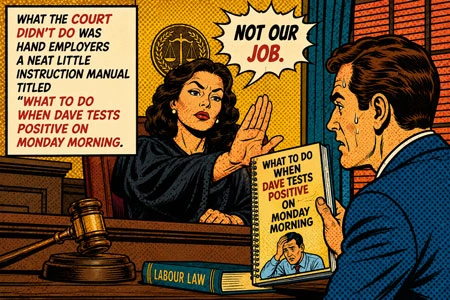
And therein lies the problem. Workplace safety obligations remained, as did employment policies with drug testing. But cannabis had changed.
A substance that adults could lawfully consume in private could also remain detectable in their bodies long after its intoxicating effects had passed. Eventually, those two realities were going to collide, and they did.
Presence is not necessarily impairment
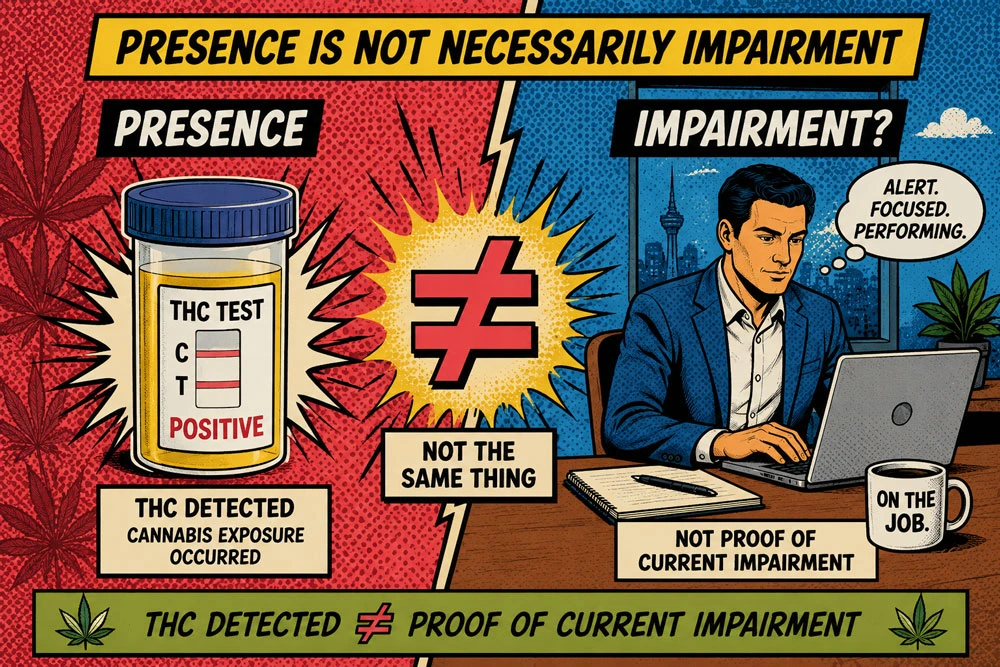
This is probably the single most important thing to understand about cannabis and workplace drug testing.
THC and its metabolites can remain detectable after the intoxicating effects of cannabis have worn off. How long they remain detectable can depend on several factors, including frequency of use, the person, the product and the type of test being used.
A urine test therefore generally tells you that cannabis exposure occurred, but it doesn't necessarily tell you that someone is currently high, and that's a rather important difference if you're sitting at your desk on Monday morning being questioned about something you did privately over the weekend.
And it became central to one of South Africa's most important workplace cannabis cases.
The case that changed the conversation: Enever v Barloworld
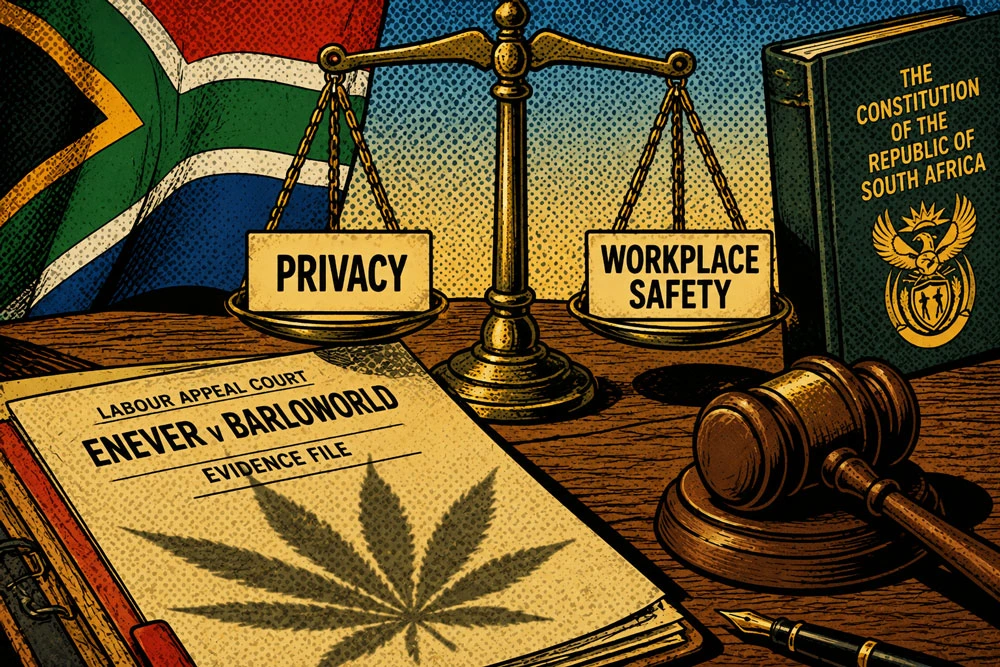
Bernadette Enever had worked as a category analyst at Barloworld Equipment for more than 13 years. She used cannabis privately outside working hours and tested non-negative for cannabis during a routine medical assessment in January 2020. There was no allegation that she had arrived at work visibly intoxicated, behaved unsafely or been unable to perform her job, but Barloworld operated a zero-tolerance policy.
A positive test = Policy breach = Dismissal.
Enever challenged that decision. The Labour Court initially sided with the employer, but in April 2024, the Labour Appeal Court reached a very different conclusion. The court looked beyond the positive test and considered the nature of Enever's job, the absence of evidence that she was impaired at work and the impact of the employer's policy on her privacy.
Importantly, Enever was an office-based employee rather than someone operating dangerous machinery. The Labour Appeal Court found the policy overbroad in its application to her circumstances and concluded that her dismissal was automatically unfair. She was awarded 24 months' compensation.
The case didn't establish that employers can never test for cannabis, and it didn't establish that employees can arrive at work impaired, and it certainly didn't make workplace safety irrelevant.
What it did establish was something far more nuanced: A positive cannabis test cannot always be treated as automatic proof of workplace impairment or misconduct.
Before we go further: this is not a free-for-all
The Enever judgment is not permission to arrive at work high. Employers still have legal obligations to provide safe workplaces. They can prohibit cannabis use and possession at work and take action where an employee is genuinely impaired or creates a safety risk.
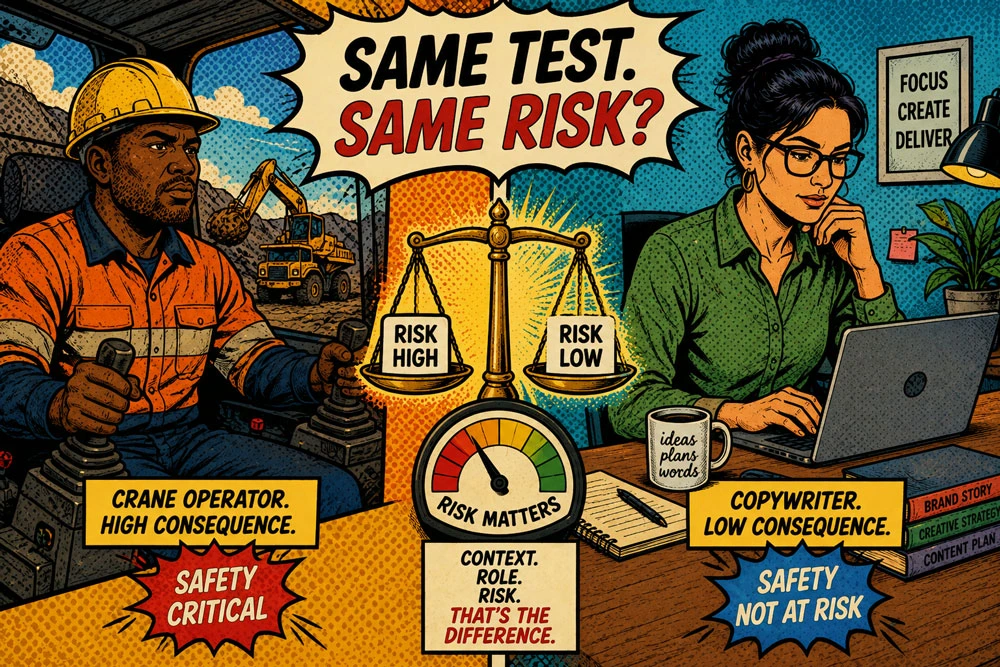
The nature of your job matters enormously, so someone working at a desk is not necessarily in the same position as someone driving a heavy vehicle, working underground, operating machinery or performing another safety-sensitive role. Workplace policies also matter. So do the facts of each individual case.
The lesson from Enever isn't: "Cannabis is legal, so my employer can't do anything." It's closer to: Cannabis detection, cannabis impairment and workplace risk are not automatically the same thing.
And that brings us to something cannabis consumers don't always think about.
What exactly are you using?
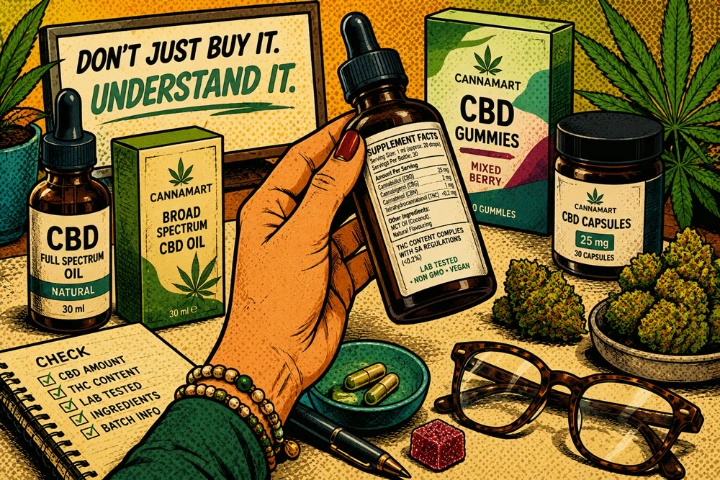
For someone subject to workplace drug testing, understanding what's actually in a cannabis product becomes particularly important, and this is where the word CBD can create a false sense of simplicity.
CBD and THC are different cannabinoids. CBD itself is not THC, but seeing "CBD" on the front of a product does not automatically tell you everything about its cannabinoid content. Depending on the formulation, CBD products may be sold as isolate, broad-spectrum or full-spectrum.
CBD isolate
CBD isolate generally refers to cannabidiol that has been isolated from other major cannabis compounds. For someone specifically trying to avoid intentionally included THC, this may be an important product characteristic to look for, but the actual product information still matters.
Broad-spectrum CBD
Broad-spectrum products generally contain CBD alongside other cannabis compounds while being formulated to exclude THC. Again, don't rely solely on the words on the front of the packaging. Formulations differ, so read the available product information.
Full-spectrum CBD
Full-spectrum products contain CBD together with a broader range of naturally occurring cannabis compounds and may include small or trace amounts of THC. That's particularly relevant if workplace drug testing is part of your reality.
THC-containing cannabis products
Then, of course, there are cannabis products intentionally containing THC. These deserve particular consideration if you work in an environment where cannabis testing occurs because THC exposure may remain detectable beyond the period in which you experience its effects.
And here's the part worth putting in bold: No cannabis or CBD product should be assumed to be "drug-test safe". Testing methods differ, so does products, patterns of use as does individual bodies. There is no responsible way for a retailer to promise that using a particular cannabis product will guarantee a negative workplace drug test.
What you can do is become a better-informed consumer.
What should you check before buying?
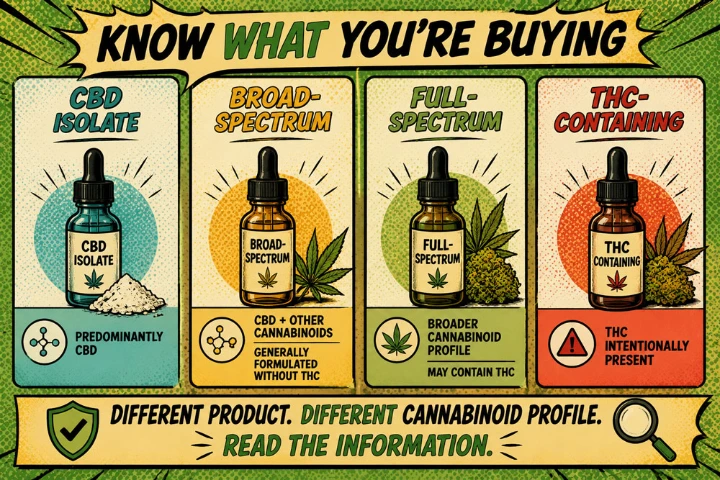
If workplace testing matters to you, don't stop reading at the word "CBD". Look at the available information about the product.
Ask:
How much CBD does it contain?
Does the product declare THC content?
Is it described as CBD isolate, broad-spectrum or full-spectrum?
Does the ingredient or product information provide further cannabinoid details?
Does the product intentionally contain THC?
Not every cannabis product will present this information in exactly the same way, and a product label cannot predict how your employer's testing system will respond, but knowing what you're buying puts you in a much stronger position than assuming: CBD = no THC = no workplace-testing concern. Those three things are not automatically synonymous.
CBD, broad-spectrum, full-spectrum and THC: the quick version
| Product category | What it generally means | What to consider if you're workplace-tested |
|---|---|---|
| CBD isolate | Predominantly isolated CBD | Check the specific product information rather than assuming anything about testing |
| Broad-spectrum CBD | CBD plus other cannabis compounds, generally formulated without THC | Check the manufacturer's information about THC |
| Full-spectrum CBD | CBD with a broader range of cannabis compounds | May contain small or trace amounts of THC |
| THC-containing cannabis | Products intentionally containing THC | THC exposure may be relevant to workplace testing |
This isn't about finding a clever loophole around your employer's testing policy. It's about knowing what's in your product before you use it.
Testing is changing too
The Enever case has also helped fuel a broader conversation about whether traditional workplace testing methods are actually measuring what employers need to know.
If the genuine concern is workplace safety, simply establishing historical cannabis exposure may not always answer the most useful question, such as is this person impaired now?
This is why oral-fluid or saliva testing has attracted growing attention. These methods can provide information about more recent cannabis exposure than traditional urine testing, although no testing method should be treated as a magical impairment detector.
Researchers and occupational-health specialists have also proposed more risk-based approaches in which the nature of someone's job helps determine the appropriate workplace policy and testing strategy.
It makes intuitive sense. A crane operator and a copywriter do not carry the same workplace risk. The law is increasingly recognising that workplace cannabis policies may need to acknowledge that difference too.
If you test positive at work, what should you do?
First, don't panic, then find out what you're actually being accused of. Is the allegation that you were impaired at work? That you behaved unsafely or did you breach a particular workplace rule? Was it simply that THC was detected?
Ask for the relevant workplace policy and understand what it says. Keep copies of test results, disciplinary notices and correspondence. If you believe you're being disciplined purely because of private cannabis use without evidence of workplace impairment (particularly if you are not in a safety-sensitive role) consider obtaining advice from a labour-law practitioner, union or the CCMA.
Don't assume that Enever automatically decides your case. It doesn't. Your job, workplace, policy, test and circumstances all matter.
And what does this mean for employers?
The message is equally straightforward from the other side of the desk. Cannabis policies need to reflect the realities of cannabis rather than simply borrowing rules developed around alcohol. Employers still have every right (and responsibility) to manage genuine workplace impairment and safety risks.
But policies should also consider the employee's role, the nature of the workplace, the testing method being used and what a positive result actually establishes. The question is no longer simply: "Did cannabis show up?" Increasingly, it is: "What does this result actually tell us about workplace safety and impairment?"
Frequently Asked Questions
Can I be fired for testing positive for cannabis at work in South Africa?
Not automatically. A positive cannabis test does not necessarily prove that you were impaired while working. The Enever v Barloworld judgment showed that factors such as your role, workplace safety requirements, evidence of impairment and the reasonableness of your employer's policy can all matter. If you work in a safety-sensitive position or there is evidence that you were impaired at work, however, the situation may be very different.
Is it legal to use cannabis at home and still go to work?
Adults may use, possess and cultivate cannabis for personal purposes in private within the framework of South African law. That doesn't give anyone the right to arrive at work impaired. Private cannabis use and workplace impairment are separate issues, and that distinction sits at the heart of the Enever case.
How long can THC show up on a workplace drug test?
There isn't one simple answer. Detection can vary depending on the type of test, the cannabis product, frequency and pattern of use, and individual factors. Most importantly, detectability should not automatically be confused with impairment. THC metabolites may remain detectable after the intoxicating effects have passed.
Can CBD make me test positive for THC?
CBD itself is not THC. However, some CBD products (particularly full-spectrum formulations) may contain small or trace amounts of THC. That is why someone subject to workplace drug testing should look beyond the word "CBD" and check the available cannabinoid and THC information for the specific product.
Does "CBD" mean "THC-free"?
No. These terms are not interchangeable. CBD isolate, broad-spectrum CBD and full-spectrum CBD are different product formulations. Full-spectrum products may contain THC, while broad-spectrum products are generally formulated without THC. Always check the information supplied for the individual product rather than relying on the category name alone.
Is CBD isolate guaranteed to pass a workplace drug test?
No. Cannamart does not recommend treating any CBD or cannabis product as guaranteed "drug-test safe". Products, testing methods and individual circumstances differ. If workplace testing is important to you, understanding the cannabinoid content of the product you choose is a sensible starting point.
What should I check when buying CBD if my workplace conducts drug testing?
Look at the available product information and establish whether the product is CBD isolate, broad-spectrum or full-spectrum. Check whether THC content is declared and whether additional cannabinoid, supplier or laboratory information is available. The goal isn't to find a product that promises to beat a drug test. It's to make sure you understand what you're putting into your body.
Can my employer still have a zero-tolerance cannabis policy?
Employers remain responsible for workplace health and safety and may impose restrictions appropriate to particular jobs and working environments. However, Enever demonstrates why blanket policies can become problematic when they fail to distinguish between private cannabis use, the mere presence of THC, actual workplace impairment and genuine safety risks. The nature of the employee's job is particularly important.
What should I do if I'm disciplined after a positive cannabis test?
Ask what the allegation actually is. Cannabis detection, impairment, unsafe behaviour or breach of a particular workplace rule. Request the relevant workplace policy and keep copies of test results, disciplinary documents and correspondence. Because every situation is different, consider speaking to a labour-law practitioner, your union or the CCMA before making major decisions such as resigning.
Does the Enever judgment mean South African employees can use cannabis without worrying about workplace rules?
No. The judgment doesn't give employees unrestricted permission to use cannabis regardless of their job or workplace responsibilities. Employers can still manage impairment and genuine safety risks. What Enever helps clarify is that lawful private cannabis use, THC detection and workplace impairment should not automatically be treated as the same thing.
The bigger question
Strip away the legal terminology and cannabis in the workplace raises a surprisingly human question. How far should your employer's authority extend into your private life?
South Africa's courts haven't answered every part of that question yet, but Prince and Enever have moved the boundary. Private cannabis use does not mean workplace impairment. Workplace safety does not disappear because private cannabis use is lawful, and a positive test does not necessarily tell the whole story. For cannabis consumers, there's another lesson tucked inside all of this and it is to know what you're using.
Whether you choose CBD isolate, broad-spectrum CBD, full-spectrum CBD or a THC-containing cannabis product, take a moment to understand the cannabinoid information available before making your choice, particularly if workplace testing is something you need to consider.
Cannabis law in South Africa is still evolving, as are cannabis products and so are workplace policies. Perhaps the smartest thing the rest of us can do is evolve with them.
The smoke is clearing. And what's emerging isn't a workplace without rules, it's one where the rules increasingly need to make sense.
Explore with Cannamart
Compare CBD and cannabis product categories and check the available THC and cannabinoid information before choosing the option that fits your needs.Understanding the difference between CBD isolate, broad-spectrum, full-spectrum and THC-containing products is a good place to start. Cannamart does not represent any cannabis or CBD product as guaranteed to be "drug-test safe" or "workplace safe". Workplace policies, testing methods and individual circumstances vary.
Sources
Zootly — Fired for THC at Work? The Law Might Be on Your Side.
Bowmans — South Africa: LAC finds that an employee who was dismissed for recreational cannabis use at home was unfairly discriminated against.
SAFLII — Enever v Barloworld Equipment South Africa (JA86/22) [2024] ZALAC 12.
De Rebus — Balancing workplace safety and privacy: Implications of the Enever v Barloworld judgment on cannabis use policies.
UKZN School of Law — Opinion: Recent Legal Research on Workplace Cannabis Testing Reveals Practical Solutions.
Occupational Health Southern Africa — Cannabis testing in the post-legalisation era: beyond zero-tolerance to a risk matrix approach balancing safety and privacy (2025).
Bizmag — Feeling Green at Work? SA's Cannabis Workplace Policy Explained (2026).
Skillsportal / Polity — Occupational Health and Safety Meets Fair Dismissal Obligations (2026).
GroundUp — Can I be fired for smoking weed at home?
Disclaimer: This blog supports responsible cannabis use. The information contained in this article is for educational and informational purposes only and is not intended as health or medical advice. Always consult a physician or other qualified health provider regarding any questions you may have about a medical condition or health objectives.
Our latest content
Check out what's new in our company !